The UK government has launched a consultation on its review of the zero emission vehicle (ZEV) Mandate, seeking industry and consumer input on the route to the 2030 phase-out of new petrol and diesel cars.
The review is being carried out jointly by the UK government, Scottish Government, Welsh Government and Northern Ireland's Department for Infrastructure.
It forms part of a wider commitment to assess the Vehicle Emissions Trading Schemes (VETS) Order, commonly known as the ZEV Mandate, by early 2027, alongside the 2035 target for all new car and van sales to be zero-emission (with the cessation of all sales of new petrol and diesel cars by 2030).
Vehicle manufacturers, suppliers, charge point operators, dealers, consumers and communities have been invited to take part.
Government figures show more than one in four new cars sold in the UK are now electric, with EV sales rising 45% compared with July last year.
The Government said July marked the “strongest” new car market since 2019 (BEV sales were up 44%), and over two million electric vehicles are currently registered on UK roads. However, the UK's auto industry has warned that electric car sales are falling behind the target.
The UK Government maintains that manufacturers are on track to meet their 2025 targets, aided by “built-in flexibilities”.
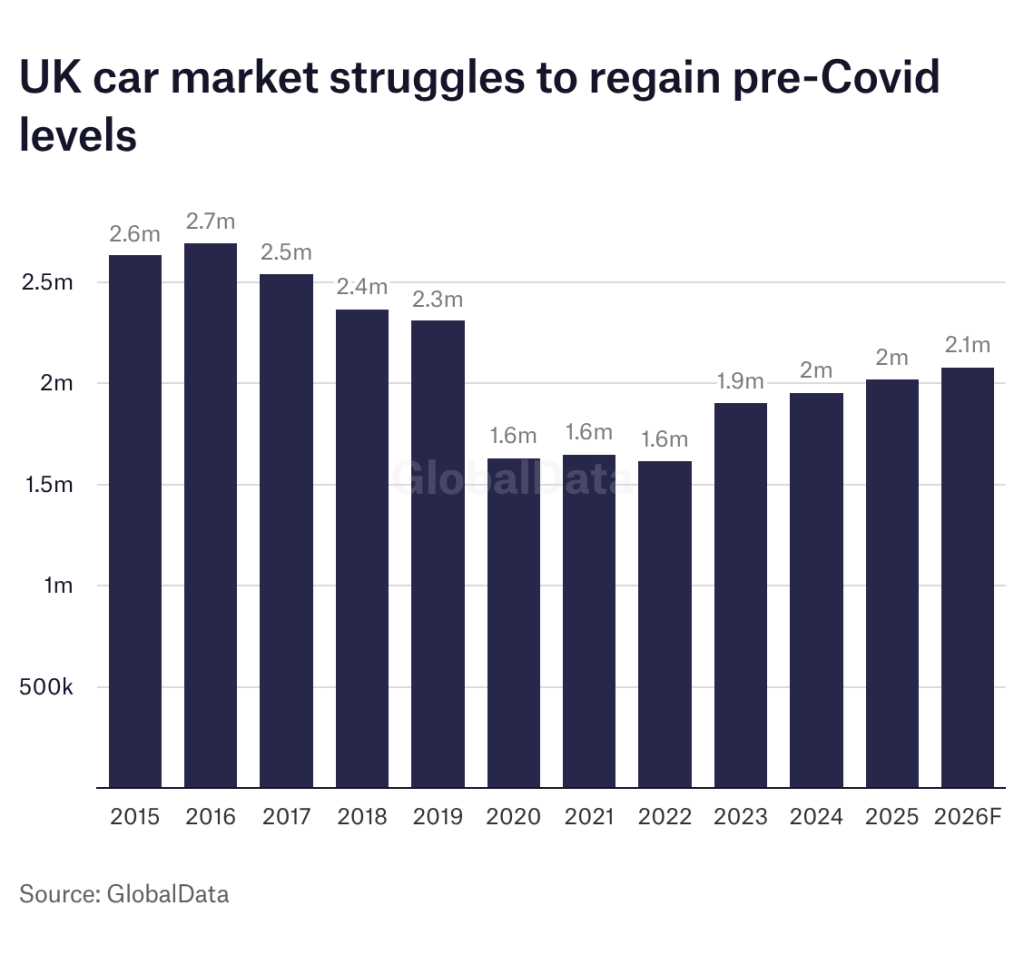
The UK SMMT trade association said BEVs are likely to reach around 27.5% of a 2m+ UK car market this year, still far short of the 33% ZEV Mandate target.
It said the BEV shortfall continues to be addressed by significant discounting, marketing and other fiscal support from industry and government – costs which are causing manufacturers to pause or even divert investment, while weakening residual values, damaging profitability and costing jobs.
Mike Hawes, SMMT Chief Executive, called for reform of the ZEV Mandate.
He said: “July’s record EV performance is a great achievement, reflecting industry’s huge investment in zero emission mobility. But that progress cannot be sustained if manufacturers continue haemorrhaging billions in EV discounts, distorting demand to avoid even steeper penalties. The sector’s commitment to decarbonisation is not in doubt but its ability to remain viable – and attract investment for an EV future – is under intense pressure. A sustainable transition will not happen merely by compelling supply when underlying demand is not keeping pace despite year-on-year growth. We need urgent reform of the regulation, else Britain risks undermining its competitiveness and the jobs and livelihoods that depend on this industry.”
See also: UK July car market gets EV boost
Citing difficult global economic conditions, including supply chain disruption and uncertainty around tariffs and trade, the government said it is “reviewing targets to ensure they remain pro-business and grounded in the real world”.
As part of efforts to expand the EV market, £7.5bn ($10.16bn) is being invested, comprising £4bn for DRIVE35 projects and £3.5bn directed towards grants for vans, trucks and cars, the Electric Car Grant, and charging infrastructure.
An additional £600m is earmarked to extend the public charging network, which currently includes more than 120,000 charge points, alongside over a million chargers installed in homes and workplaces.
This follows an earlier £400m investment that supported the rollout of more than 100,000 additional public chargers.
The consultation covers five parts.
The first four, addressed jointly by the UK government and devolved administrations, examine the ZEV Mandate's impact so far, emerging challenges, policy options – including the existing ZEV trajectory, compliance flexibilities and alternative approaches – and the carbon implications of those options.
The fifth part, dealing with how the 2030 phase-out of new cars powered solely by internal combustion engines should be defined, falls under UK Parliament's remit and is being consulted on separately by the UK government.
The 2030 phase-out commitment was originally announced in April 2025.
UK Transport Secretary Heidi Alexander said: “The UK EV market is strong – sales are up, British manufacturers and charge point operators are investing billions, alongside our backing of £7.5bn, including our Electric Car Grant that has helped over 160,000 people make the switch.
“It is right we keep targets under review to ensure they are practical and back British industry.”
GlobalData forecasts a UK car market of 2.1m units in 2026.