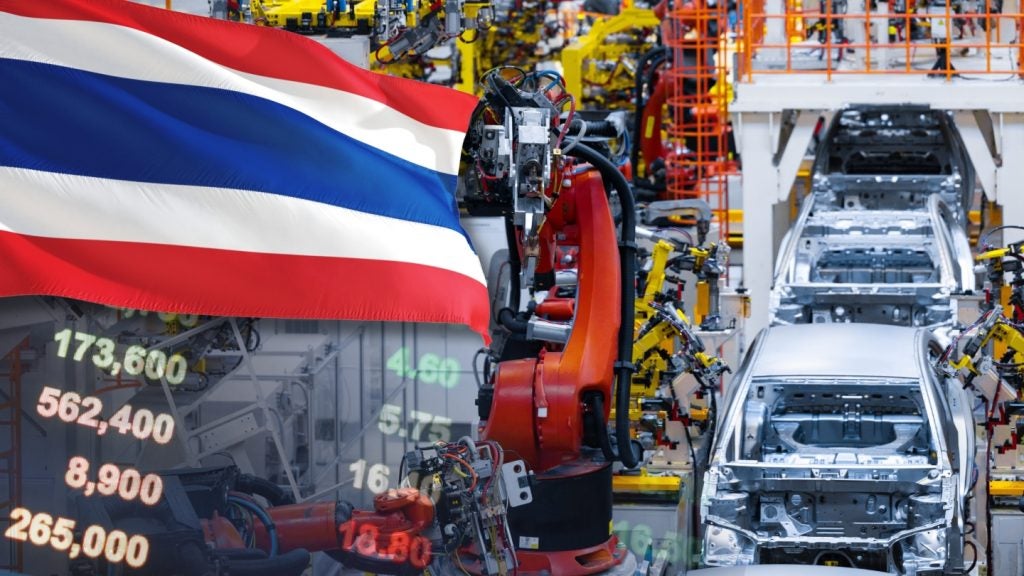
Six Japanese carmakers have confirmed plans to invest more than Bt134bn ($3.93bn) in Thailand between 2026 and 2030, the Thai Board of Investment (BOI) said.
The announcement followed a Thai delegation's visit to the Japanese capital, Tokyo, from 17 to 20 November 2026, led by Deputy Prime Minister and Finance Minister Ekniti Nitithanprapas.
Industry Minister Varawut Silpa-archa, BOI Secretary-General Narut Teodsathirasak, government agencies and leaders of the Joint Committee of Private Sector Organisations also took part.
Toyota, Honda, Isuzu, Mitsubishi, Mazda and Nissan each held separate talks with the Thai side.
Officials outlined the new automotive excise tax structure, designed to support domestic production and parts use, and the transition to next-generation automotive technologies.
According to a translated version of the statement, the carmakers' plans cover several types of electric vehicles (EVs), hybrid technology, biofuels, automation and local production of key components.
The Thai Cabinet earlier this month approved a 35% excise tax on imported battery EVs and range-extended EVs, effective 1 January 2027.
The delegation also met officials from Japan's Ministry of Economy, Trade and Industry and the Japan External Trade Organisation.
The BOI and the Japan Business Federation (Keidanren) co-hosted a business dialogue with 64 executives from 38 Japanese companies across nine sectors.
Discussions covered modern automotive, AI and advanced electronics infrastructure, and modern power grids, and three cooperation agreements were announced.
Narut said the next step is to turn the discussions into investment projects.
The BOI will work with the Joint Standing Committee on Commerce, Industry and Banking, three private sector organisations and relevant agencies to follow up with Japanese investors group by group.
In automotive, it will monitor the carmakers' investment plans and connect Thai parts makers to new vehicle models.
The BOI said it aims to move from “Made in Thailand” to “Made with Thailand”, from a production base to an economic partnership covering investment, human resource development, technology and opportunities for Thai entrepreneurs.
Narut added: “The mission in Japan is over, but the real work begins now. The BOI will act as a bridge connecting the economies of the two countries. On one hand, it will connect Thailand's opportunities, policies, and readiness with Japanese companies that possess technology and capabilities.”