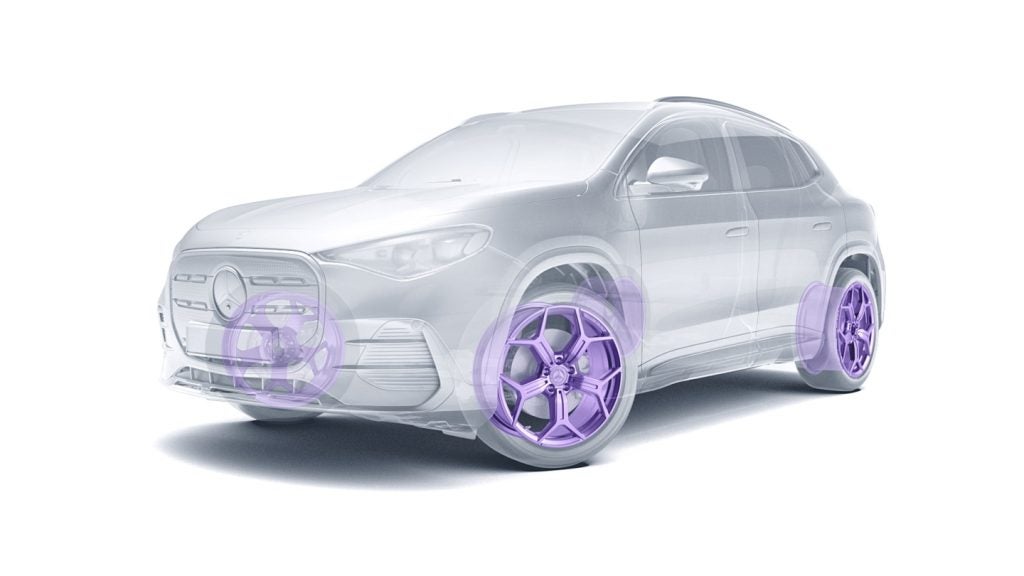
Mercedes-Benz has set emissions reduction goals for 2039 and agreed a multi-year primary aluminium supply contract with Hydro for vehicle production.
The company aims to reduce greenhouse gas emissions from its manufacturing sites by 90%, vehicle operational use-phase emissions by 80% where market conditions allow, and emissions across relevant value-chain stages by 70%, all against 2019 levels.
Mercedes-Benz plans to maintain emissions reductions after 2039 to achieve net zero during the following decade.
Its binding agreement with Hydro will run from 2026 until beyond 2030 and covers at least 10% of Mercedes-Benz’s primary aluminium requirements.
Alongside the Hydro agreement, Mercedes-Benz joined the First Movers Coalition's Aluminium Sector, committing to source at least 10% of its annual primary aluminium demand in line with the coalition's criteria by 2030.
Hydro’s aluminium currently has an emissions intensity of about 4.0 kg CO₂e per kg, against an international average of 14.4 kg CO₂e per kg.
CO₂e per kg measures the total greenhouse gas emissions generated per kilogram of a product or material, standardised to carbon dioxide's warming impact.
The contract requires this to fall to 3.5 kg CO₂e per kg by 2028 and 3.0 kg CO₂e per kg from 2030.
The arrangement also includes Hydro CIRCAL, containing at least 75% post-consumer scrap and having a footprint of no more than 2.0 kg CO₂e per kg.
Mercedes-Benz intends to use the material in series production of its next-generation large battery-electric vehicles from 2027.
The company also plans to launch 14 fully electric models between 2025 and 2027.
In steel, Mercedes-Benz completed a trial involving iron ore fines from Kumba Iron Ore’s Sishen operation in South Africa.
HyIron processed the ore directly into direct reduced iron through a hydrogen-fuelled rotary kiln, avoiding pelletisation and producing scope 1 and 2 emissions of 10kg per tonne.
The resulting steel was used in a test component for the Mercedes-Benz EQS.
Mercedes-Benz and HyIron have signed a memorandum of understanding covering technical studies into industrial scale-up and possible further projects.
The group reported cumulative manufacturing energy-efficiency savings of around 570GWh over the past two years.
Mercedes-Benz Group integrity, governance and sustainability management board member Olaf Schick said: “Even in challenging market conditions, Mercedes-Benz puts sustainability at the core of its strategy alongside resilience and competitiveness.
"With the enhanced transparency of Ambition 2039 we are outlining new milestones in our decarbonisation pathway to turn sustainability into operational reality: tangible, measurable and infused into the heart of our products.”