As one of the world’s biggest OEMs, Ford’s current position reflects the transition that the automotive sector is undergoing. Traditional internal combustion engine (ICE) and commercial vehicles remain profitable, but the company is having to manage the challenges of electrification, supply-chain pressures and rising competition. Like other established players, it is having to invest heavily in electric vehicle (EV) development while managing margin risks.
Indeed, the announcement on December 9 that Ford has partnered with Renault to develop two Ford-branded passenger EVs based on Renault Group’s Ampere platform is evidence of its efforts to do just that. The tie-up should serve as an efficient means of Ford delivering two electric cars for its portfolio while keeping their development costs trim.
Product and technology
Despite cost pressures, though, Ford is pursuing electrification aggressively, investing in new EV models and battery technology. It is ramping up its manufacturing capabilities for pure EVs and is expanding the availability of hybrid models. There is an ongoing focus on software-defined vehicles, with over-the-air update capability and integration of advanced driver assistance systems (ADAS) as standard features in future model cycles. GlobalData figures indicate that Ford’s investment in technology has trended upward, with a noticeable tilt towards proprietary battery management and e-mobility platforms.
Implications:
- Suppliers should be prepared for increased sourcing of high-voltage components, battery cells, and complex electronic modules.
- Expect increasing requirements to do with software, digital validation and cybersecurity for embedded systems.

Manufacturing and supply chain
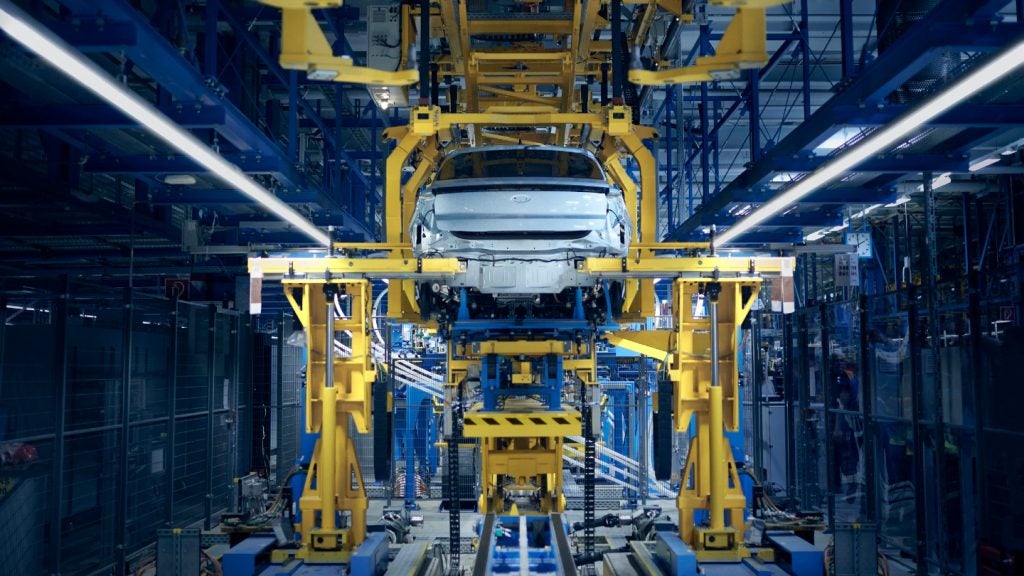
Ford is realigning its manufacturing footprint globally, with a focus on nearshoring, localisation and modularity to reduce risk and improve resilience. The company’s investments in battery production facilities (notably in North America and Europe) highlight the priority of vertical integration and secure access. While volume variability remains a challenge – due to both demand fluctuations and regulatory shifts – Ford is optimising its inventory and logistics using advanced analytics.
Implications:
- Tier‑1s may see pressure for deeper collaboration on risk-sharing and just-in-time logistics.
- New opportunities may arise for local plants or tier‑2s close to Ford’s EV hubs.
- Suppliers need to show transparency in sustainability and ethical sourcing as Ford’s partner audits become more rigorous.
Brand, customer experience and loyalty
Ford’s marketing strategy emphasises customer engagement, loyalty incentives (especially for electrified vehicles), and a more streamlined, digital-first path to vehicle acquisition and ownership. Direct-to-consumer pilots and online retail partnerships show further evolution in go-to-market thinking. GlobalData analysis notes positive brand perception gains among younger, sustainability-minded demographics.
Implications:
- Aftermarket and digital service opportunities are increasing, but suppliers will need to support rapid in-field serviceability and high uptime.
- Customer-facing parts (interior, electronics, connectivity) must support personalisation and lifecycle updates.
Regulation, sustainability and risk
Regulatory compliance, especially regarding emissions and supply-chain transparency, remains front-of-mind. Ford’s public commitments include carbon neutrality for global operations by 2050 and aggressive targets for recycled material content and water/energy conservation in plants. The company is managing macroeconomic volatility (from input costs to geopolitical disruption) through diversified supply and hedging strategies, as indicated in recent GlobalData M&A analysis.
Implications:
- Suppliers lagging in emissions reporting or ESG credentials may face loss of business, while those providing compliant/recycled inputs may see market share gains.
- Required certifications and third-party audits will rise, demanding greater investment in compliance and reporting.
Financial and investment position
Despite headwinds from inflation and EV start-up costs, Ford’s financial strategy balances cost discipline with major capex allocation towards electrification and digital. GlobalData’s financial data shows Ford maintaining robust liquidity and credit access, supporting long-term bets in new ventures and alliances. The company’s asset-light partnerships (notably in mobility and batteries) indicate a disciplined approach to capital outlay.
Implications:
- Longer-term contracts and revenue pooling may become more common, benefiting suppliers tuned to programmatic collaboration.

Outlook for suppliers and partners
- Electrification is non-negotiable: Investment in EV‑ready subsystems and software is mandatory for ongoing supplier relevance.
- Localisation and transparency are escalating: Suppliers with regional capacity and strong ESG credentials gain a competitive edge.
- Agility in response to volume and scope shifts: Flexibility in logistics and inventory will mitigate risk from Ford’s evolving global strategy.
- Collaboration and risk-sharing: Expect more integrated relationships – joint R&D, co-location, data sharing – to optimise quality, cost and market access.
- Compliance and sustainability: Suppliers able to meet Ford’s rising bar for responsible sourcing and regulatory disclosure will remain preferred partners.