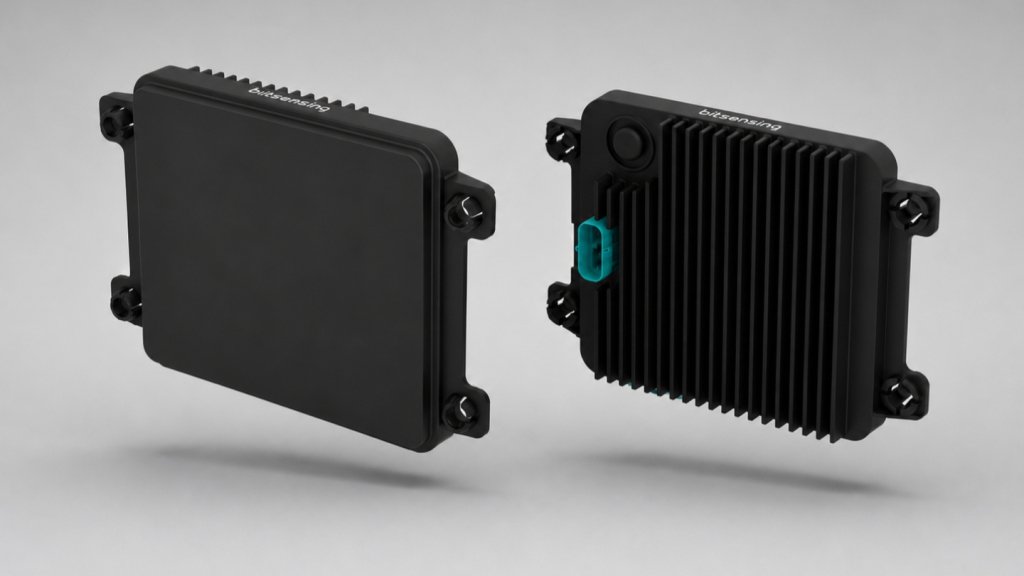
South Korea-based bitsensing has introduced AIR4D Imaging Radar, a 4D radar sensor built for autonomous vehicle (AV) developers seeking to speed up commercial fleet deployment.
The company said the new system provides access to high-resolution 4D perception data, including point cloud, Doppler and raw radar outputs, allowing AV companies to train and refine driving models with more complete sensor information.
bitsensing said this addresses a common shortcoming in existing 4D radar products, many of which operate as closed systems and limit access to raw testing data.
bitsensing CEO Jae-Eun Lee said: “By delivering high-resolution 4D perception data, including, importantly, all raw data outputs, our goal at bitsensing is to empower autonomous vehicle companies to build systems that at speed and at scale.”
bitsensing said AIR4D differs from many mobility radar products because it was developed specifically for autonomous driving rather than adapted from advanced driver-assistance system (ADAS).
The company said the radar is tuned for AV artificial intelligence models and designed for lower power consumption and better thermal efficiency, both important for real-world fleet operations.
The product supports a camera-and-radar sensor architecture, which bitsensing said could reduce sensor costs per vehicle while improving perception reliability.
The radar is designed to deliver direct velocity measurements for individual objects, helping vehicles detect how fast nearby cars, cyclists and pedestrians are moving.
AIR4D is also said to offer detection at distances of up to 300m, giving autonomous systems more time to react.
bitsensing said the radar maintains performance in low-light conditions and in adverse weather such as rain, fog and snow, where visibility-dependent sensors can struggle.
It added that 4D imaging radar improves on older 3D radar by adding elevation data, allowing vehicles to better distinguish between objects such as pedestrians, vehicles, road signs and other obstacles.
That added spatial detail gives AV systems a more complete real-time picture of their surroundings, which the company said is necessary for safe autonomous driving at scale.
The launch comes just over three months after bitsensing introduced an ADAS package aimed at improving safety in existing buses and heavy trucks.
At the time, the firm said the kit is designed for use in dense urban traffic and to help operators meet United Nations Economic Commission for Europe standards.