
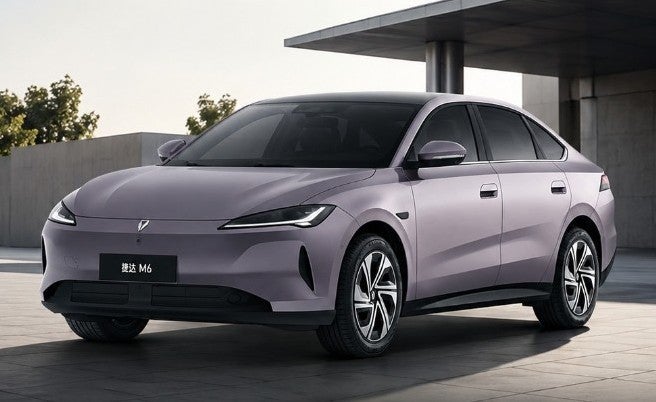
FAW-Volkswagen launched the all-new Jetta M6 four-door sedan at a marketing event in Chengdu, China, as the Sino-German joint venture looks to regain lost ground in China’s highly competitive and fast-evolving new energy vehicle (NEV) market.
Last year, FAW-Volkswagen spun off its Jetta brand operations into a new standalone company, called FAW-Volkswagen Jetta Automotive Technology Company Ltd, based in Chengdu and focused on developing and marketing intelligent NEVs for the local market. The aim was to give the Jetta brand greater autonomy in areas such as R&D, decision-making, and new product development to help speed up new product cycles and competitiveness, while continuing to leverage its parent company’s overall technological resources including R&D, smart manufacturing, and supply chains.
Go deeper with GlobalData


Discover B2B Marketing That Performs
Combine business intelligence and editorial excellence to reach engaged professionals across 36 leading media platforms.
FAW-Volkswagen Jetta plans to launch five new models by 2028, four of which will be NEVs, including battery electric vehicles (BEVs), plug-in hybrids (PHEVs), and possibly also range extended electric vehicles (EREVs)). The company has set a target of between 400,000 and 500,000 vehicles per year in the medium term.
The Jetta brand was established in 1991 and has achieved cumulative sales of around 5.3 million units to date. It has played an important role in the development of China’s automotive industry, which is now the world’s largest in terms of production and sales.
The Jetta M6 battery electric vehicle (BEV) is the first model to be launched by the new company. Three variants of the model were launched, all priced at under CNY 100,000 (US$ 15,000), including the 465 Pro, 555 Max, and 555 Ultra. Reports suggest the company received 10,000 orders on its first day.
The base model, the 465 Pro, is powered by a 43 kWh lithium iron phosphate (LFP) battery pack and a 113 kW (152 hp) front-mounted electric motor, while the 555 Max and Ultra models are powered by 52 kWh LFP battery packs and 145 kW electric motors. The batteries can be fast-charged from 30% to 80% in around 25–30 minutes.