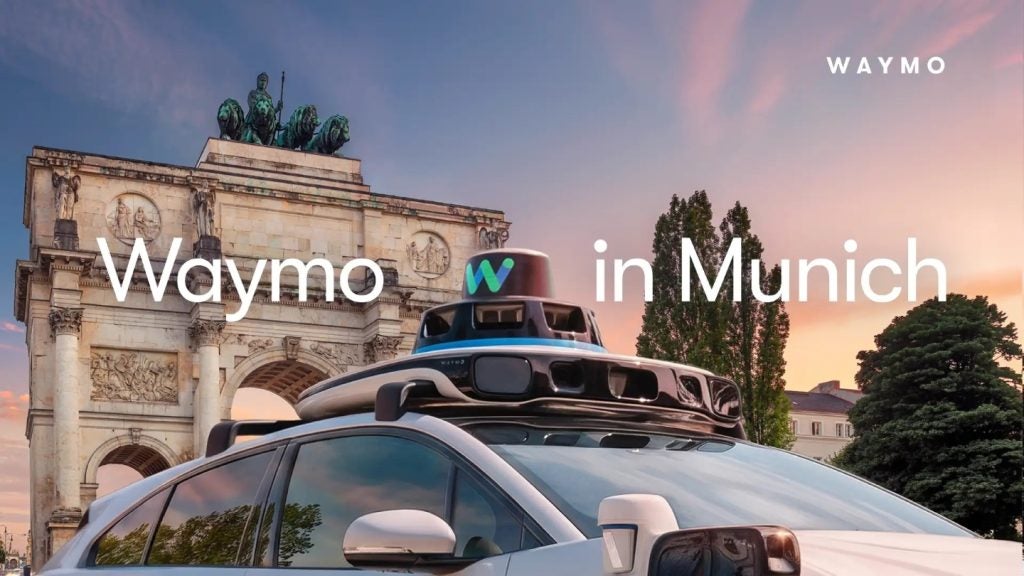
Alphabet-owned Waymo has started laying the groundwork for a driverless ride-hailing service in Munich, marking the autonomous vehicle company's entry into the European Union.
According to a company statement, Waymo vehicles will begin appearing on Munich's roads under manual control “in the coming weeks” as part of an effort to build high-definition maps of the city's street network.
The exercise is intended to help the company's self-driving system adjust to Munich's “distinct driving conditions”, with commercial access for the public targeted towards the end of 2027.
Waymo co-CEO Tekedra Mawakana said: “As we prepare to launch, earning the community's trust is our top priority. We look forward to investing in local fleet operations, creating high-skilled jobs, and delivering a safe, reliable service for residents and visitors alike.”
Munich joins Tokyo and London, where Waymo is already conducting similar testing.
The company outlined a staged rollout.
Initial testing will be carried out by trained autonomous specialists positioned behind the wheel, a validation phase meant to assess how the Waymo Driver system responds to local traffic patterns before the service is opened to the wider public towards the end of 2027.
Waymo said it is in discussions with local, state and federal authorities in Germany regarding the regulatory clearances needed to run the service.
The company cited internal data drawn from more than 350 million fully autonomous kilometres, saying its technology has been linked to 16 times fewer serious-injury crashes than those involving human drivers, alongside 14 times fewer pedestrian injury crashes and six times fewer cyclist injury crashes.
Waymo described the planned Munich service as intended to work alongside the city's existing public transport, cycling and pedestrian infrastructure rather than to substitute for it.
The move follows the establishment of a German legal entity, Waymo Germany, in June, which lists Google's Munich office as its registered address.
In February, Waymo closed a $16bn financing round that valued the company at $126bn on a post-money basis.