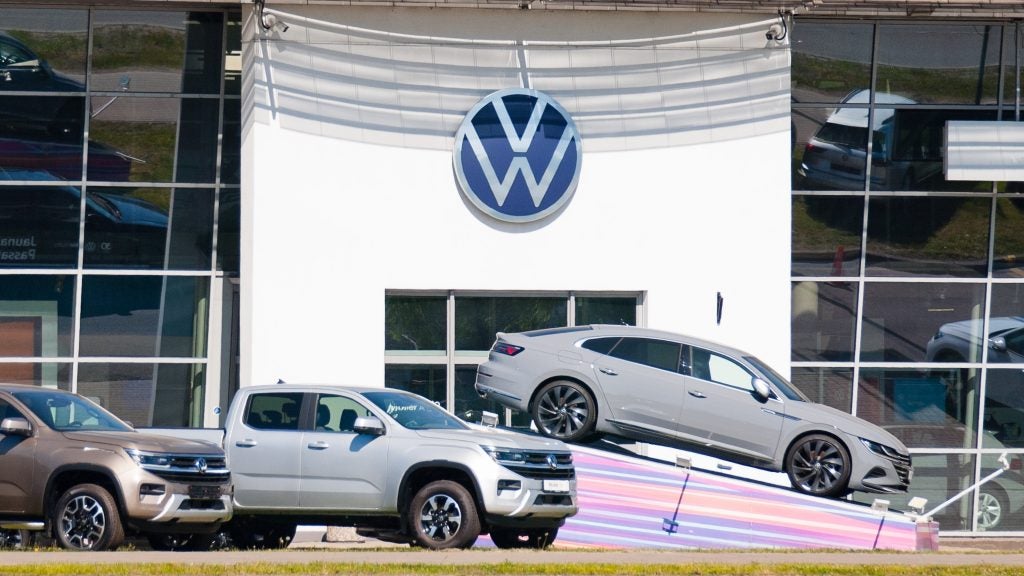
Volkswagen's Brazil chief has warned that Chinese automakers' aggressive expansion in the country is depressing resale values of its vehicles, even as the company rules out a price war.
Ciro Possobom, who leads Volkswagen's Brazilian operations, told Reuters the company felt confident in its competitive standing despite mounting pressure from lower-cost rivals.
Chinese manufacturers have rapidly built market share in Brazil by offering electric and hybrid vehicles at more accessible price points.
“While new entrants are entering aggressively and putting downward pressure on prices, we believe we are well positioned,” Possobom told the publication, adding that Volkswagen would not be drawn into a price war with Chinese competitors.
Possobom also highlighted the operational impact of the war in Iran, citing both direct and indirect consequences for the business.
He said supply chain disruptions have so far remained containable and have not fed through to vehicle prices, though the company has resorted to airfreighting certain components as shipping uncertainty around the Strait of Hormuz persists.
Around a fifth of its parts are sourced from abroad.
According to the report, Volkswagen does not anticipate that component shortages will materially affect production volumes or pricing in the short term.
Possobom noted that April had been a particularly strong month for the business, outpacing its first-quarter 2026 performance.
The update from Brazil comes as Volkswagen Group grapples with broader financial headwinds.
The group reported a 14.3% decline in operating profit for the first quarter of 2026, with US tariffs and intensifying competition in China cited as key factors.
Operating profit for the three months to 31 March 2026 came in at €2.46bn, down from €2.87bn in the same period a year earlier.
The group also acknowledged that existing cost-reduction efforts are falling short.
Meanwhile, Porsche SE, the holding company that controls a significant stake in Volkswagen, swung to a net loss after tax of €923m in the first quarter, driven by a €1.3bn non-cash impairment against its Volkswagen holding.