Volvo Cars plans to launch thirteen new vehicles by the end of 2030 as it seeks to widen its customer base and support a goal of doubling market share.
The Geely-owned carmaker said the programme will include seven models for Western markets and six designed specifically for China, describing it as the “largest” product development effort in the company’s history.
The vehicles will include battery electric, electrified and third-generation hybrid variants, aimed at customers who remain reluctant to switch entirely to electric powertrains.
According to the company, the expanded range forms part of a broader strategy under which Volvo Cars aims to achieve earnings before interest and taxes (EBIT) margin above 8% over the long term, alongside stronger cash generation.
The strategy follows a challenging second quarter.
Retail sales fell to 171.5 thousand cars from 181.6 thousand, while revenue declined 16.9%to Skr 77.67bn ($7.91bn) from Skr93.49bn.
EBIT improved to Skr826m from a Skr10.06bn loss, with the EBIT margin at 1.1% versus –10.6%.
Net income was Skr417m, compared with a Skr8.10bn loss.
The seven vehicles intended for Western markets will be software-defined and electrified, built on the company's HuginCore computing platform in combination with its SPA2 and SPA3 architectures.
Volvo Cars said this approach would reduce technology and manufacturing investment compared with current levels.
For the Chinese market, the company will rely on platforms shared with Geely, together with a technology stack, common components and a joint supply chain tailored to China, to deliver six domestically focused models.
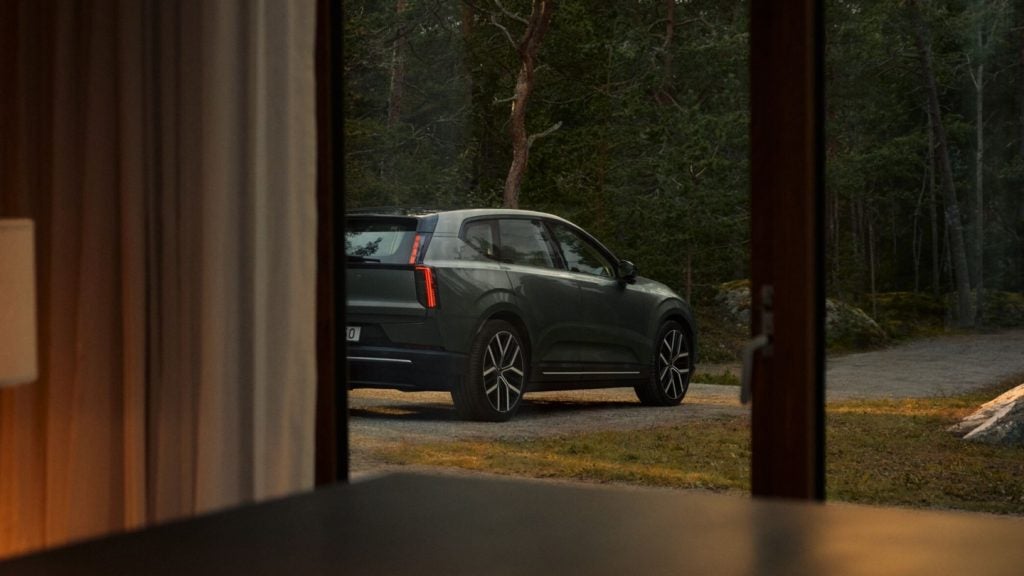
Volvo Cars noted that many of the upcoming vehicles are expected to require lower investment per unit than earlier platform-launch models such as the EX60.
Component commonality or sharing with Geely is also expected to increase, with Volvo Cars aiming for around 30% full commonality by 2030, up from approximately 10% at present.
The company estimates this could generate cost savings of around 5% by 2030, in addition to further indirect benefits.
It also plans to pursue cuts to corporate overheads and productivity improvements across its value chain.
Alongside its product strategy, Volvo Cars outlined a revised commercial approach centred on “transparent pricing”, “streamlined offers” and “fast-delivery versions”.
The company said it would introduce regular over-the-air software updates as well as an all-inclusive Care offer.
Volvo Cars president and CEO Håkan Samuelsson said: “The challenges for the car industry are immense, but our strategy gives a clear answer to how we adapt to these and our ambition is to be the leading premium car brand.
“With a regionally optimised product portfolio, unique synergies, electrification and new levels of efficiency, we will build a company capable of reaching beyond 8% EBIT margins.”