Toyota Motor, Daimler Truck and Volvo Group have signed a binding agreement under which Toyota will acquire an equal one-third shareholding in fuel cell joint venture Cellcentric.
Once completed, Toyota will become an equal partner in Cellcentric alongside Daimler Truck and Volvo Group, with each company holding one third of the business.
The companies said the collaboration is intended to reinforce Cellcentric’s position in the development and manufacture of fuel cell systems for heavy-duty commercial applications.
Under the agreement, the three parties plan to work on equal terms to strengthen Cellcentric’s technological lead, industrial scale and competitiveness in heavy-duty fuel cell technology.
Cellcentric will continue operating as an independent and autonomous company, serving customers in heavy-duty on-road and off-road transport and other heavy-duty applications, including coaches, stationary power generation, marine, rail and heavy off-highway equipment.
The companies will continue to compete independently in all other areas of their businesses.
They aim to support the development of hydrogen supply and infrastructure through collaboration with industry associations and partners across the hydrogen value chain.
In a statement, Toyota said: “Through collaboration with industry associations and partners across the entire hydrogen value chain, the partners aim to actively support the development of hydrogen supply and infrastructure and unlock the hydrogen ecosystem.”
Cellcentric was established in 2021 as a joint venture between Daimler Truck and Volvo Group.
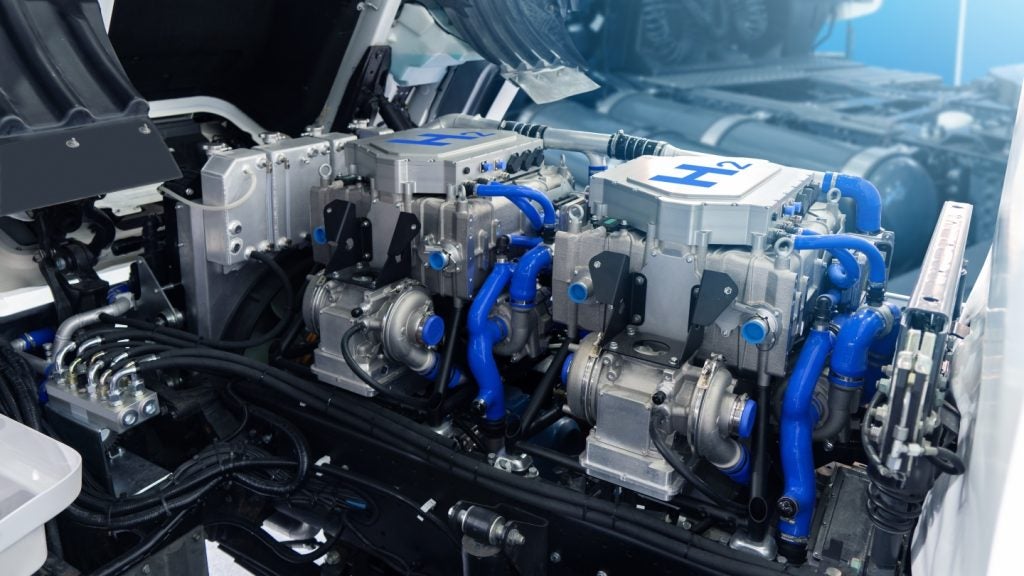
The company develops, produces and commercialises fuel cell systems for heavy-duty commercial vehicles and other applications with comparable requirements.
It has more than 560 employees across sites in Kirchheim/Teck, Esslingen and Stuttgart in Germany, and Burnaby in Canada.
In 2024, it begun pilot production for fuel cell systems at its Esslingen-Pliensauvorstadt site in Germany.
The deal follows a non-binding agreement signed at the end of March this year.
Completion of the transaction is expected around the end of 2026 or the start of 2027, subject to regulatory approvals.