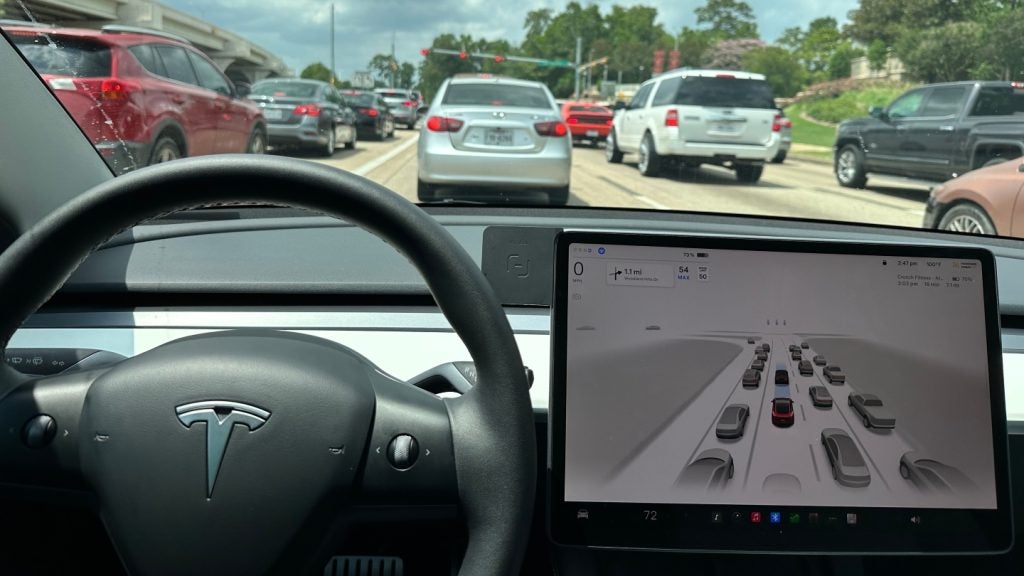
Sweden's transport authority has urged the European Union (EU) to reject Tesla's Full Self-Driving (Supervised) software unless the carmaker removes its ability to exceed speed limits, Reuters reported.
The advice came in an April letter from the Swedish Transport Administration (TRV) to the EU's Technical Committee on Motor Vehicles (TCMV), obtained by the publication.
The TCMV meets on 30 June, ahead of an EU-wide vote.
FSD lets vehicles steer themselves on city streets and motorways under human supervision and is approved in several European countries; EU-wide clearance would aid Tesla's sales amid growing competition from Chinese EV makers.
The system's “Speed Offset” feature lets drivers set a margin by which the car may exceed posted limits.
Tesla's manual adds drivers must "drive at a safe speed based on traffic and road conditions" rather than rely on it.
The TRV's letter, cited by Reuters, said “allowing automated systems to systematically exceed legal speed limits risks undermining both the legal framework and the expected safety benefits of vehicle automation”.
It added: "Failing this, the Swedish Transport Administration recommends that TCMV vote against the proposed introduction."
A TRV spokesperson told the publication that its position remains unchanged since April and aligned with the Swedish Transport Agency (STA), Sweden's national type approver.
Internal documents show the STA raised concerns with Tesla and the Dutch regulator RDW, including at a meeting on 4 June.
RDW approved FSD's use in April and backs the rollout. The STA, Sweden's TCMV representative, said it was assessing the matter.
FSD uses cameras and map data to detect speed limits.
In the US, the system offers five modes – Sloth, Chill, Standard, Hurry and Mad Max – ranging from driving under the speed limit to exceeding it most aggressively; these options are not offered in Europe, where Tesla instead provides “Contextual Max Speed” and “Speed Offset”.
Finland and Norway have raised concerns, while Lithuania, Estonia, Denmark and Belgium have approved FSD, following the Netherlands.
An Estonian official cited speeding worries but said the country approved FSD because drivers retain responsibility; Estonia's TCMV vote remains undecided.
Denmark's road authority said drivers bear full responsibility for speed limits when using FSD.
EU approval needs a qualified majority – 15 of 27 member states, representing at least 65% of the population.
Denmark's road authority said rejection would see the Dutch provisional approval lapse after six months, withdrawing national approvals based on it.