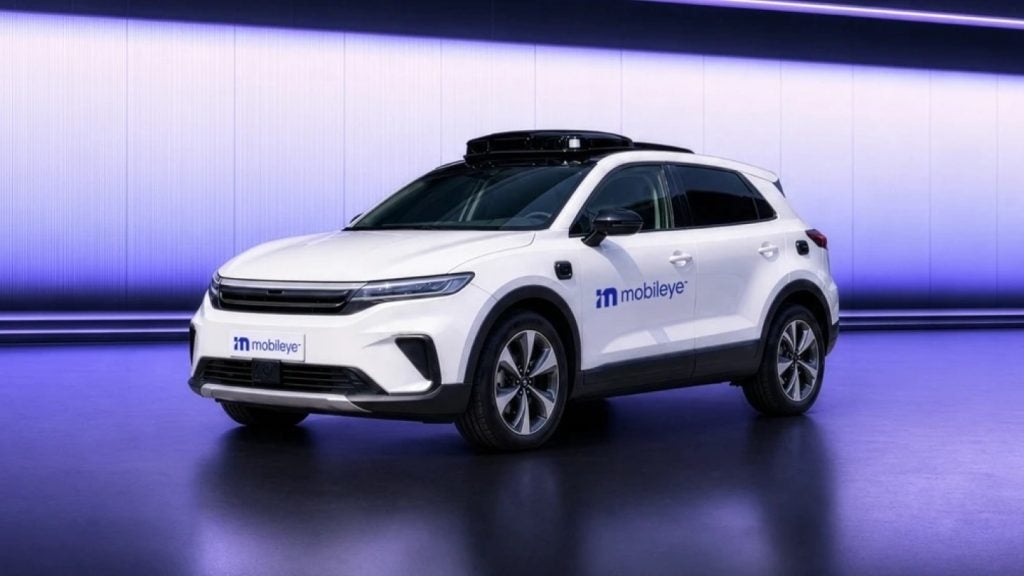
The autonomous vehicle (AV) market is increasingly bifurcated: most near-term revenues are coming from advanced driver assistance and limited “supervised” automation in consumer cars, while Level 4 progress is being concentrated in geofenced pilots for shuttles, ride-pooling, and goods movement where regulators can tightly define operating conditions. Against this backdrop, Mobileye Drive’s significant share of permits in Germany indicates a more regulated, fleet-led path for Level 4 autonomy, says GlobalData, a leading intelligence and productivity platform.
GlobalData: More on autonomous tech
Competitors in the AV market are moving ahead with different playbooks—some scaling robotaxi services city by city, others partnering with OEMs for modular stacks, and several players narrowing scope to specific operational design domains (ODDs) to accelerate safety validation—which implies that countries with clear permitting, safety-case expectations, and public-road access will shape which AV models become commercially repeatable and attract long-term investment.
In this context, Kraftfahrt-Bundesamt (KBA) data published in August 2026 indicating that Mobileye Drive-equipped vehicles represent more than 60% of valid Level 4 testing permits suggests that a meaningful share of Germany’s authorized testing activity is clustering around a stack positioned for fleet use. From a national perspective, that concentration may help standardize interfaces and operational practices for municipalities and transit stakeholders, but it also highlights the policy trade-off Germany faces—enabling rapid learning through a few scaled programs while maintaining competitive openness and rigorous oversight as deployments expand beyond pilot corridors.
Madhuchhanda Palit, Senior Automotive Analyst at GlobalData, comments: “Mobileye’s business strategy, as reflected in Mobileye Drive, is oriented toward a commercial-grade, multi-platform Level 4 system aimed at mobility-as-a-service rather than a single vehicle line or one-off prototype. The company’s emphasis on stack integration—AI-based perception and decision-making, REM road intelligence, EyeQ compute, and redundancy and safety frameworks—aligns with operators’ requirements for uptime, repeatability, and governance across routes and cities.”
Competitors, by contrast, are often optimizing either for direct-to-consumer feature adoption (prioritizing volume and gradual capability upgrades) or for vertically integrated robotaxi operations (prioritizing tight control over the fleet, mapping, and dispatch). The implication is that Germany’s permit distribution may be signaling which approach is currently best aligned with its regulatory posture: system suppliers that can integrate across multiple platforms and support an operational ecosystem may be advantaged in early public-transit and shared-mobility use cases.
Palit concludes: “Mobileye Drive’s majority presence among valid Level 4 testing permits in Germany may be read as an indicator of where regulated testing momentum is accumulating, not as a proxy for immediate mass deployment. The next phase will hinge on incident-free operational scaling, cost-per-kilometer progress, and how effectively AV programs integrate with public transport networks and city governance.
“For Germany, maintaining a predictable approval pathway while expanding real-world operating experience will be central to converting Level 4 testing into durable mobility services and domestic ecosystem benefits.”