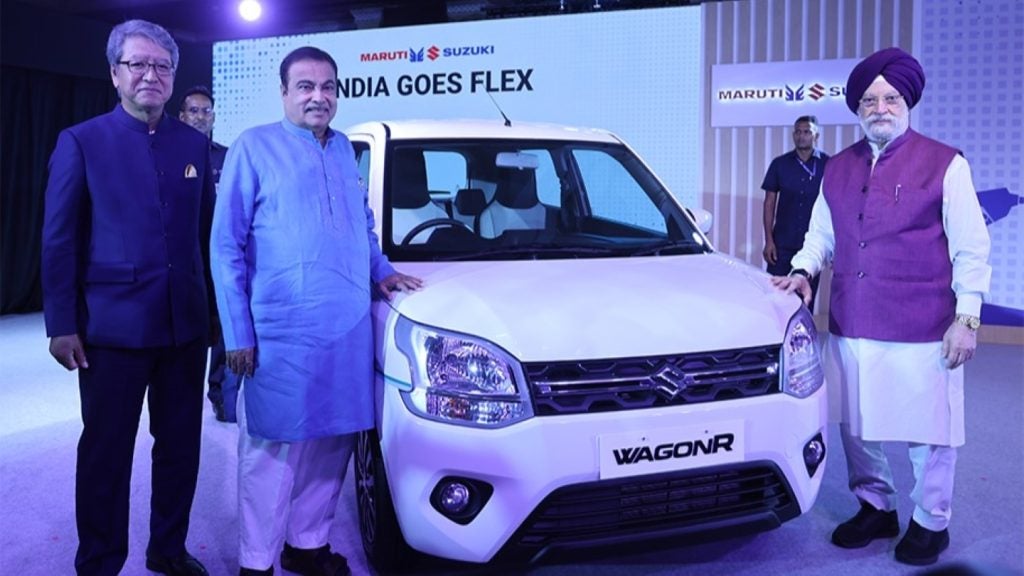
Maruti Suzuki India has introduced the Wagon R FFV, marking the first Suzuki model engineered to operate on any blend of ethanol and petrol.
Suzuki Motor’s Indian subsidiary has positioned the vehicle as a measure to reduce particulate matter emissions and improve local air quality.
The launch sits within a wider powertrain diversification strategy at Suzuki, which spans hybrids, battery electric vehicles, and compressed natural gas and compressed biogas options in addition to flex-fuel technology.
The company says this multi-technology approach is intended to align with varying regional energy infrastructure and customer needs.
It said: “Mass production of automobiles equipped with this technology marks a first in the Indian automotive industry.”
The timing follows a significant milestone in India's national fuel programme.
India achieved 10% ethanol blending in petrol by 2022, some five months ahead of schedule, and subsequently brought forward its 20% blending target from 2030 to 2025.
The country reached the E20 threshold in mid-2025, five years earlier than originally planned.
According to a separate press statement, policy measures including guaranteed ethanol pricing, the opening of multiple feedstock sources, and a rapid expansion of domestic distillation capacity were credited with enabling the accelerated progress.
Maruti Suzuki's production performance has meanwhile remained robust.
Global output in April 2026 reached 304,040 units, an 11.4% year-on-year increase and the eighth consecutive month of growth, driven by record overseas production.
India contributed 209,501 units to that total.
Global sales in the same month climbed 20.9% year-on-year to 309,237 units.
Japan recorded a 2.9% sales decline and extending a run of seven consecutive falls in minivehicle sales.
Exports grew 9.2% year-on-year to 17,821 units, with the January–April cumulative total up 24.2%.
On the capacity front, Maruti Suzuki late last month commenced production at its second vehicle assembly plant in Kharkhoda, Haryana, with the Victoris SUV as the inaugural model.
The facility adds 250,000 units of annual capacity, bringing the Kharkhoda site's combined total to 500,000 units per year.