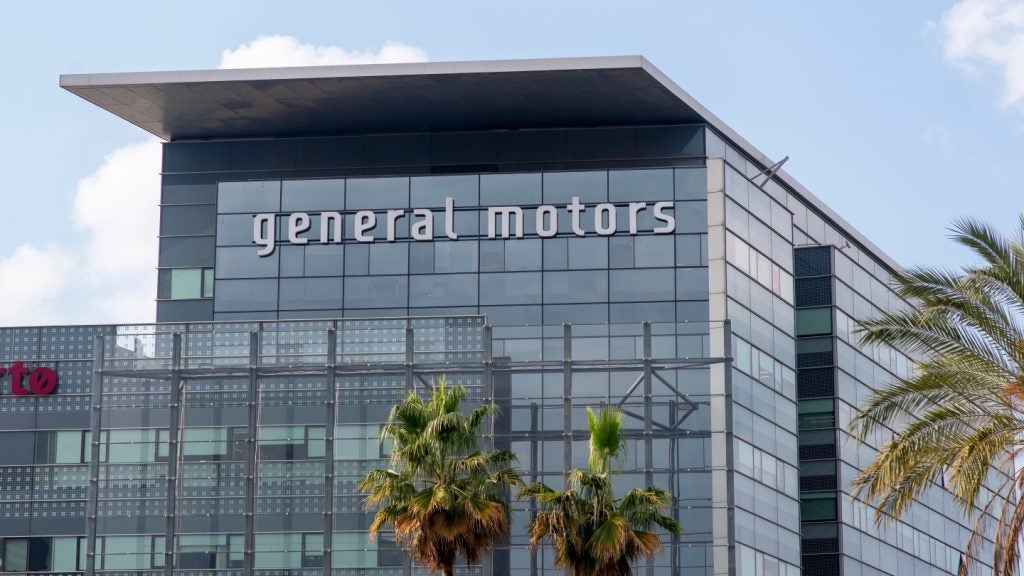
General Motors (GM) expects rising competition in the US as global carmakers view the market as a “safe haven” from Chinese rivals and says it will stay “lean” in response.
Chief financial officer Paul Jacobson told the Financial Times in London, that the US was “becoming an outlet for global automakers who are facing the pressure of China in their international markets”. He said: “It will become more competitive.”
Jacobson said GM would keep working to make its electric vehicles (EVs) more affordable and profitable.
He cautioned that US climate policy could stay volatile for the next five years.
GM took a $6bn writedown early this year as it scaled back EV production capacity and is developing new batteries expected to cut EV costs significantly from 2028.
Before Chinese President Xi Jinping's White House visit last week, the American auto industry urged President Donald Trump to keep Chinese vehicles out through ultra-high tariffs and a ban on Chinese software.
Executives and politicians have pointed to the swift European expansion of BYD and Chery as a sign of how fast Chinese manufacturers could grow in the US without trade barriers.
Concern has grown since Trump said he would “be OK” with Chinese companies building US car plants if they employed American workers.
Jacobson declined to comment on a possible entry by Chinese carmakers.
He said: “We need to make sure that the business is as competitive as possible with high-quality products and trim our structural costs wherever we can”.
Volkswagen, Stellantis and Toyota have also prioritised the US to offset weaker sales in China and lower profits in Europe and elsewhere.
Trump's trade war and higher tariffs have further encouraged investment.
With the average listed price of a new US car above $50,000, affordability remains a concern.
Jacobson said GM sold 700,000 vehicles last year with starting prices below $30,000.
Under chief executive Mary Barra, GM has cut its global footprint by leaving Europe, Vietnam and Australia, prioritising profit over sales volumes.
Its China business is now profitable following a restructuring, and global margin and cash flows have improved.
The rollback of vehicle emissions policies has also attracted global brands, as it lets manufacturers keep selling higher-margin petrol pick-up trucks and large sport utility vehicles.
US EV sales have continued to fall despite higher fuel prices from the Middle East conflict, following the end of EV tax credits last year.