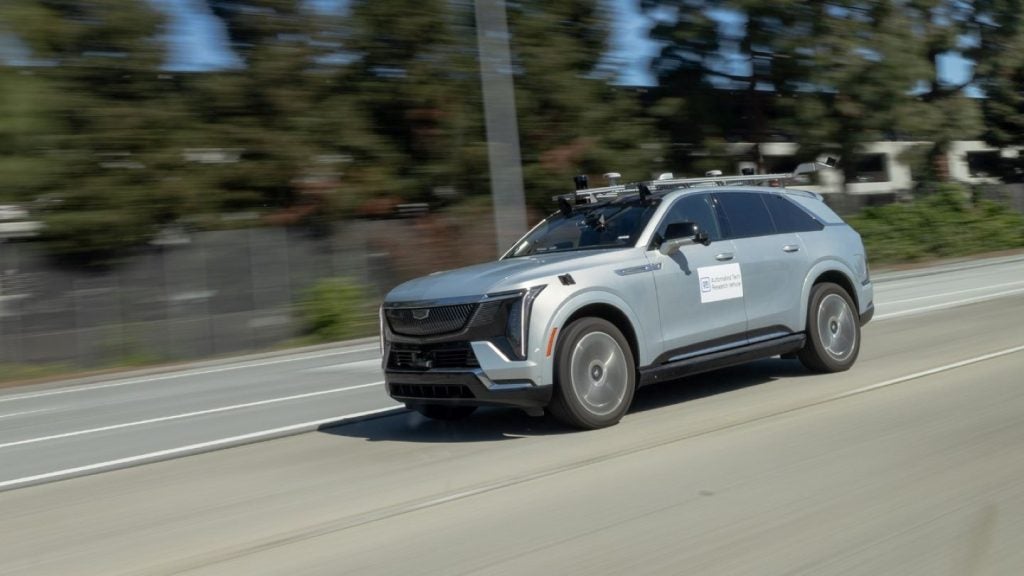
General Motors has begun supervised public-road testing of its next-generation autonomous driving technology, using development vehicles on limited-access highways in California and Michigan.
The company said more than 200 manual and supervised development vehicles are now operating in live traffic.
Each vehicle has a trained test driver at the wheel who can take manual control at any time.
General Motors said this marks a move from manual data collection towards active testing of automated functions on public roads.
The carmaker added that its data-collection vehicles have driven more than one million miles across 34 US states, and that this dataset is now supporting the next-generation system entering supervised trials.
The company described the current phase as a “critical step” in its “disciplined, incremental approach” to bringing automated driving technology to personal vehicles at scale.
In October, the company said it would introduce eyes-off driving in 2028, starting with the Cadillac ESCALADE IQ, followed by additional petrol and electric models.
General Motors said it plans to launch the capability on highways first and later expand it to “driveway-to-driveway”.
The rollout will be supported by a new centralised computing architecture, which the company said consolidates vehicle intelligence that currently sits across dozens of distributed modules.
General Motors also said it intends to offer eyes-off capability across vehicles ranging from premium Cadillacs to mainstream Chevys, without rebuilding the system for each model.
On data and learning, General Motors cited more than 800 million customer-driven miles accumulated by Super Cruise across 23 vehicles, alongside Cruise’s more than five million fully autonomous miles logged without a human driver in complex urban environments.