Continental says it continues to reduce rolling resistance in each new generation of passenger car and van tyres. Lower rolling resistance means reduced energy consumption and CO2 emissions – for more environmentally friendly mobility.
For ICE vehicles, tyres account for 20-30% of fuel consumption. For electric vehicles, lower rolling resistance significantly reduces energy use and increases range.
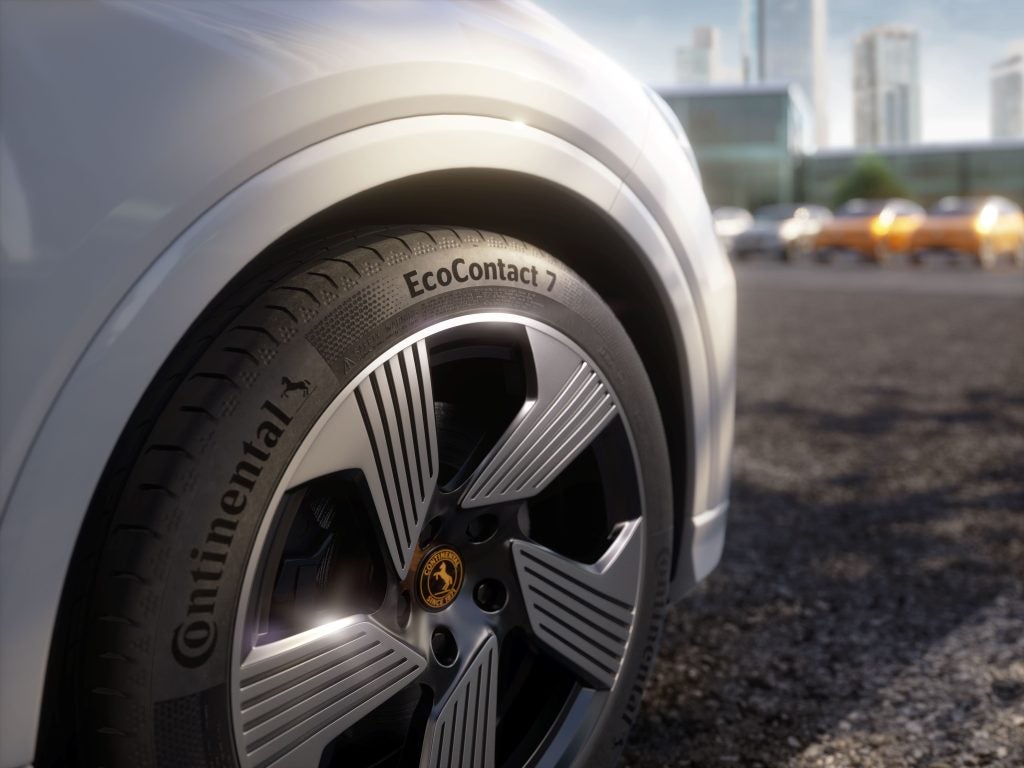
Over the past decade, Continental says it has been able to reduce rolling resistance in its passenger-car tyre portfolio by an average of 15%. The latest examples are the EcoContact 7 and EcoContact 7 S, introduced in spring 2025 – both carrying the EU “A” label for top fuel efficiency and low rolling resistance.
“Reducing rolling resistance is one of our key development goals. The less energy a vehicle needs to move, the further it can travel – saving customers money and benefiting the environment,” said Dr Christian Strübel, Continental expert for rolling resistance in passenger-car tyres. “This applies to both combustion and electric vehicles. Our aim is to optimise rolling resistance, striking the ideal balance between efficiency and safety.”
Rolling resistance, Continental points out, is the force that arises from deformation and friction as the tire rolls, costs energy. At the same time, friction between the tread and the road provides grip, which is essential for safe braking and handling. Grip is a critical safety factor, especially since each tyre’s contact area is only about the size of a postcard. Reducing rolling resistance without sacrificing grip is one of the greatest challenges in tire engineering. Continental says it is tackling this with advanced materials, innovative rubber compounds and optimised tread designs.