Skip to site menu Skip to page content

China’s domestic sales dip as production and exports surge

With subsidies suspended across a wide range of regions, sales of LVs in China recorded negative growth in November.

chantellepartridge January 09 2026

With subsidies suspended across a wide range of regions, sales of LVs in China recorded negative growth in November. Total volumes reached approximately 2.7 million units, representing a 6% YoY decline. The PV segment, which fell by 7% YoY to 2.4 million units, continued to be the primary driver, while the LCV segment posted a modest 0.3% YoY increase to 217k units. For January-November as a whole, LVs still delivered a strong performance, with total volumes reaching 24.4 million units, up by 8% YoY. PVs increased by 9% YoY, while CVs increased by 7% YoY. The seasonally adjusted annualized selling rate (SAAR) for November was 27.4 million units, down by 3% compared with the same period last year. The decline can be viewed as a normal correction as the impact of the strong stimulus policy (the trade-in program) weakened after its initial surge, rather than a sudden deterioration in underlying demand. The exhaustion of subsidy quotas and the suspension of applications in many regions directly reduced the most powerful consumer stimulus. The rapid expansion earlier in the year and the slowdown toward year-end were intended to smooth the high growth volatility seen last year and stabilize the overall annual growth rate.

Source: GlobalData

However, production showed the opposite trend in November, with China’s LV output increasing by 1% YoY to 3.4 million units. PV production rose by 1% YoY to 3.1 million units, maintaining positive YoY growth despite a relatively high base last year, although CV build declined by 1% YoY to 272k units. By brand origin, domestic Chinese OEMs produced 2.5 million units—a notable 50% YoY increase—while joint-venture OEMs reported a 9% YoY decline. In January-November as a whole, total LV production exceeded 30 million units, up by 3% YoY.

China’s LV exports also delivered a positive performance, reaching 684k units in November, which represented a robust 49.0% YoY increase and a 9.5% MoM rise. Growth was primarily driven by PVs, with overseas shipments increasing by 49.0% YoY to 617k units. CV exports also rose by 49.8% YoY to 67k units. From January to November, cumulative auto exports totaled 5.9 million units, up by 16.8% compared with the same period last year. Overall, China’s auto exports continue to show strong upward momentum, supported by sustained double-digit growth through November 2025.

The China Central Economic Work Conference, held in December, noted that the implementation of policies related to the “two new” initiatives will be optimized in 2026, directly signaling the continuation of the trade-in subsidy policy. The Ministry of Finance also recently proposed to make full use of various government bond funds, issue ultra-long-term special treasury bonds, and continue supporting the development of the “two major” projects and the “two new” initiatives. This further clarifies that the national subsidy will remain in place next year.

Specific implementation details, such as subsidy levels, eligible vehicle scope, and application procedures, are typically drafted and announced later by relevant ministries and commissions—including the Ministry of Commerce and the Ministry of Finance—as well as local governments.

Currently, some institutions expect future subsidies to adopt a tiered approach—for example, a CNY500 subsidy ($71) for a single transaction of CNY5,000 ($714) or more—along with consumer loan interest subsidies (2-3 pp) and trade-in voucher packages, among other combinations.

The automotive industry’s profit margin reportedly declined from 7.8% in 2017 to 4.3% in 2024, and further to a five-year low of 3.9% by October 2025. In the first four months of this year, more than 60 vehicle models in the domestic market saw price cuts, with many automakers launching “fixed-price” sales models. In an example of extreme cases, the Audi Q7 reportedly saw a direct price reduction of CNY140,000 ($20,000), while the Maserati Grecale EV dropped from CNY899,000 ($128,000) to CNY359,000 ($51,000).

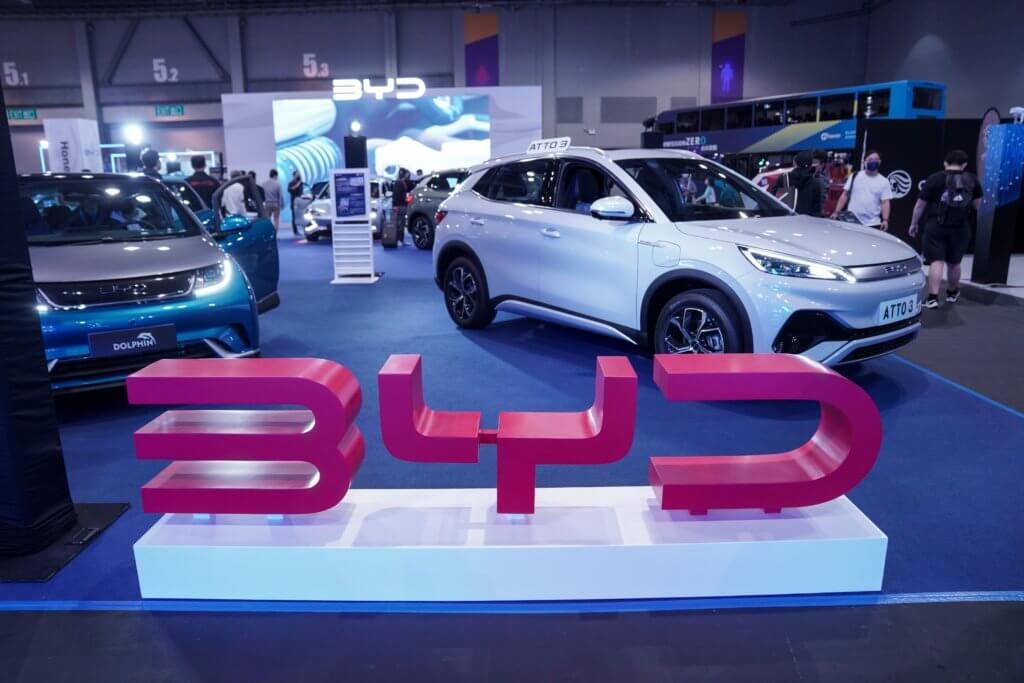
Against this backdrop, the State Administration for Market Regulation’s Guidelines for Compliance of Price Behavior in the Automotive Industry sets a clear red line for an increasingly competitive market. This is not only a regulatory response to the disorderly practice of “trading price for volume,” but also a broader rebalancing of interests across the production, sales, and consumption chain, with potentially far-reaching implications for industry development and the vehicle purchasing environment. Intervention in unreasonable price wars has already begun at the national policy level, and many automakers have expressed support following the release of the draft for comments. As of December 16, more than 10 automakers—including BYD, BAIC, Xpeng, Chery, and Great Wall Motor—had issued statements in response. It is reasonable to expect that, under these circumstances, the price war will continue to cool.

Source: GlobalData

Uncover your next opportunity with expert reports

Steer your business strategy with key data and insights from our latest market research reports and company profiles. Not ready to buy? Start small by downloading a sample report first.

Newsletters by sectors

close

Sign up to the newsletter: In Brief

Visit our Privacy Policy for more information about our services, how we may use, process and share your personal data, including information of your rights in respect of your personal data and how you can unsubscribe from future marketing communications. Our services are intended for corporate subscribers and you warrant that the email address submitted is your corporate email address.

Thank you for subscribing

View all newsletters from across the GlobalData Media network.

close