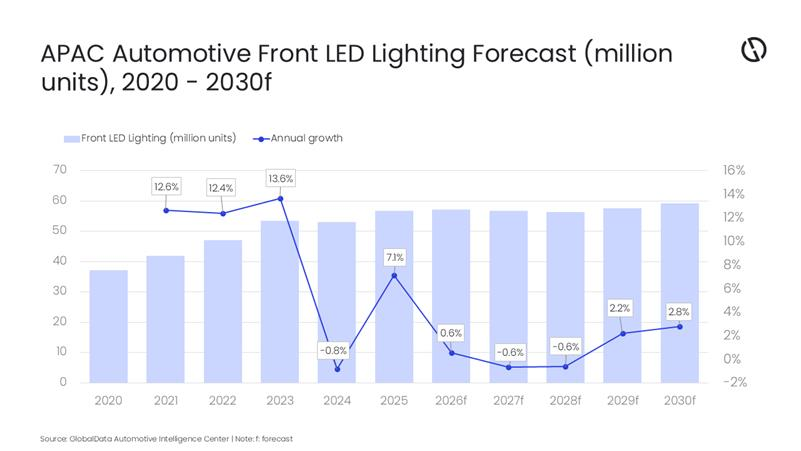
Across the Asia-Pacific (APAC) automotive landscape, lighting is quickly moving from a “parts-and-compliance” function to a core value driver—shaping safety, styling identity, and even how vehicles communicate with people around them. As the region accelerates its shift toward electrification, software-defined vehicles, and higher in-cabin expectations, automotive lighting is emerging as one of the most visible indicators of innovation. Against this backdrop, the APAC automotive front lighting LED market is projected to grow at a compound annual growth rate (CAGR) of 0.8% between 2025 and 2030, according to GlobalData, a leading intelligence and productivity platform.
GlobalData’s latest report, “Global Sector Overview & Forecast: Automotive Lighting Systems Q1 2026”, reveals that the APAC automotive front LED lighting market is poised to grow from an recorded volume of 56.7 million units in 2025 to 59.2 million units in 2030.
Madhuchhanda Palit, Automotive Analyst at GlobalData, comments: “Two themes dominate APAC’s lighting trajectory: energy saving and miniaturization. The region’s rapid EV expansion naturally rewards efficiency-focused technologies, keeping LED-based systems central to growth. LEDs align with the need for lower energy draw, longer service life, and design flexibility—benefits that matter in markets where high vehicle utilization and cost-of-ownership sensitivity remain important.”
Miniaturization is also reshaping lamp architecture across APAC-made vehicles. Slimmer front and rear modules enable more expressive vehicle design while potentially freeing packaging space—an advantage for EV platforms where space is intensely contested, and especially relevant in dense urban traffic conditions common across the region.
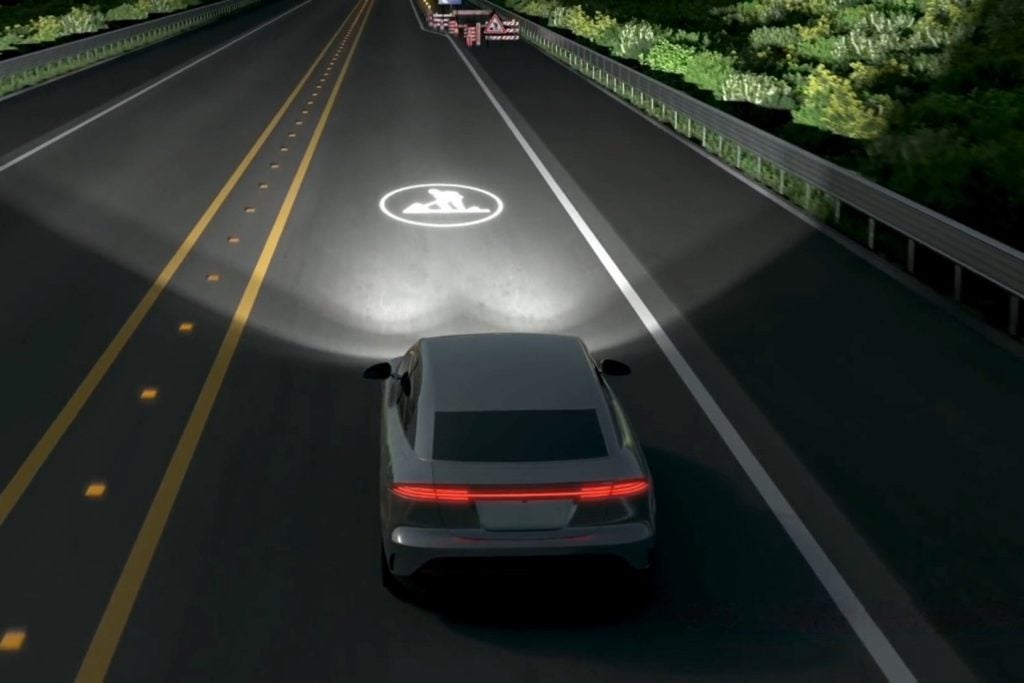
Palit adds: “APAC consumers are increasingly buying an “experience,” not just transport—making lighting a frontline feature for perceived quality, comfort, and intelligence. Features like welcome projections, door-area illumination, and dynamic animations are no longer confined to concept cars; they are becoming brand differentiators. This evolution also aligns with the rise of autonomous-ready platforms, where lighting may increasingly act as an external communication tool—signaling vehicle intent to pedestrians and other drivers, and indicating vehicle status such as battery charge.”
For instance, a snapshot of the direction of travel came from innovations presented at Auto Shanghai 2025 by Marelli, a key player in the sector, including technogies such as Pixel Rear Lamp, Near-Field Ground Projection, and Thin Lit Line Headlamp.
Palit concludes: “APAC’s growth in automotive lighting systems is increasingly tied to broader shifts in the automotive market evolution: electrification intensifies the need for efficiency, advanced driver-assistance systems (ADAS) expands the need for smarter illumination, and premiumization pushes demand for distinctive design and digital interaction. The next phase of growth is likely to be shaped by how effectively OEMs and suppliers balance design ambition with engineering realities—optical efficiency, electronics complexity, cost pressure, and regulatory compliance.”