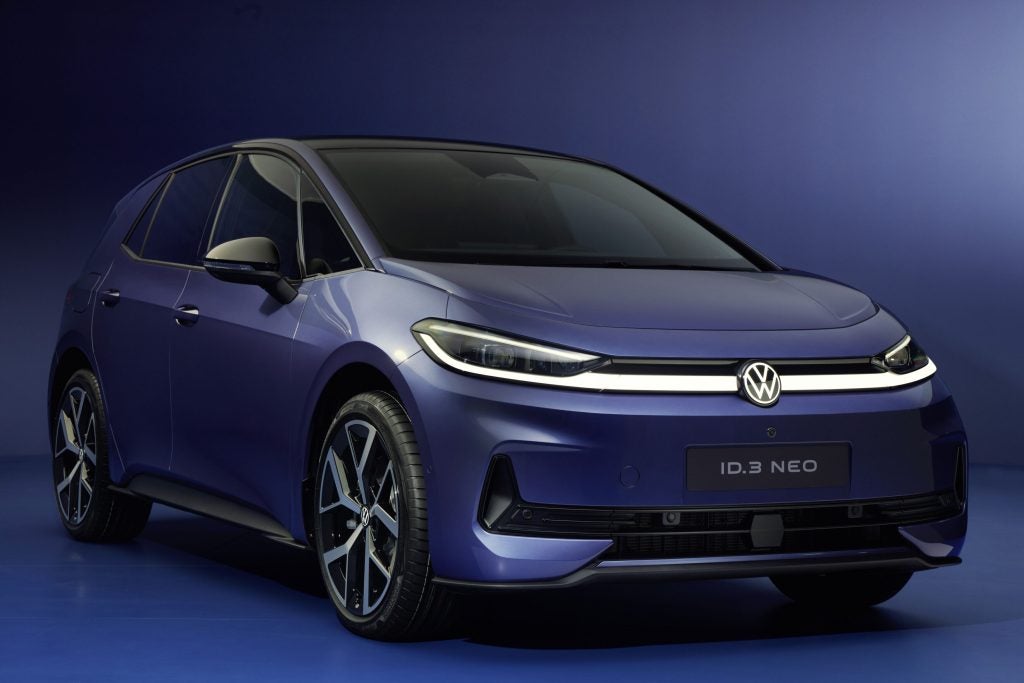
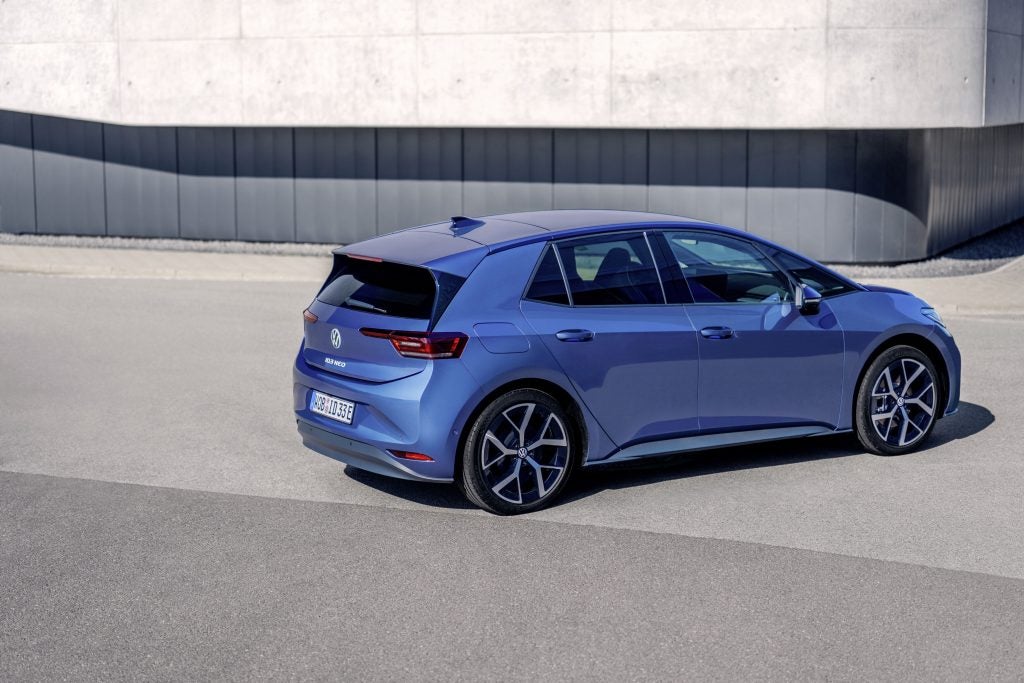
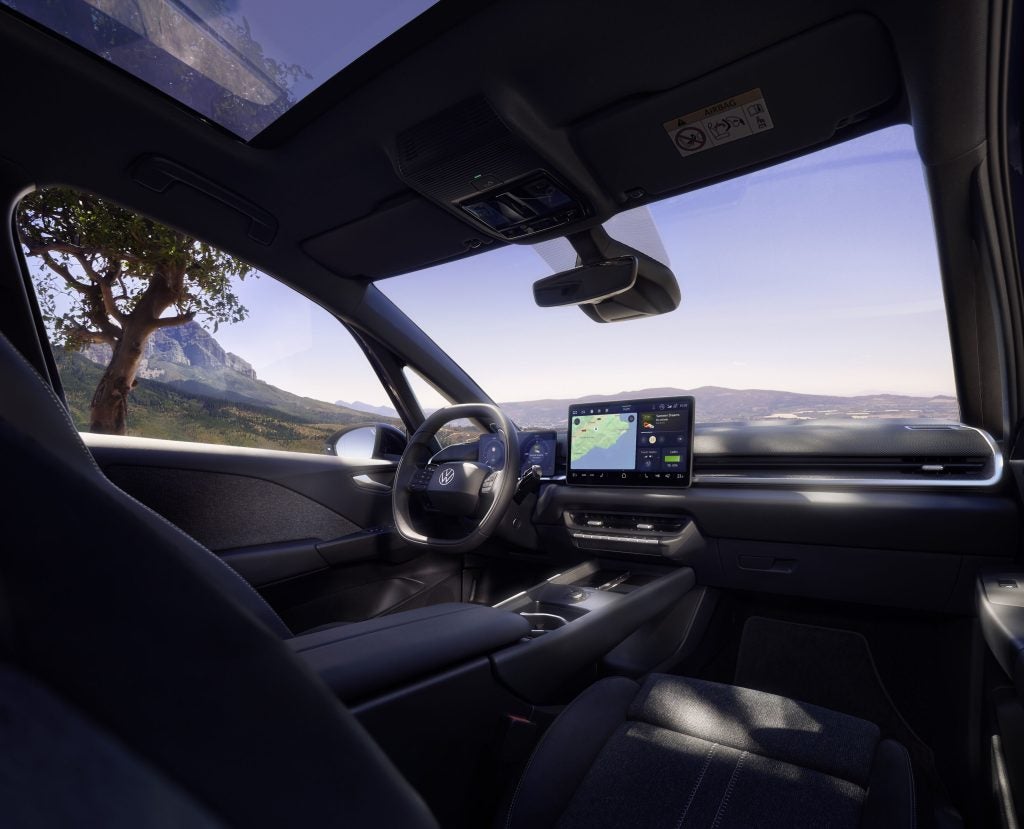
Volkswagen says the successor to the ID.3 is celebrating its world premiere with a new name and has been extensively enhanced and upgraded. The exterior features include a new vehicle front design based on Volkswagen’s ‘Pure Positive’ design language and a new light design. The interior comes with a redesigned cockpit landscape with ‘intuitive controls, embedded in interior materials at the level of the next-higher class’.
Go deeper with GlobalData


Discover B2B Marketing That Performs
Combine business intelligence and editorial excellence to reach engaged professionals across 36 leading media platforms.
The new drive system of the ID.3 Neo – combined with the largest of the three available batteries – additionally enables ranges of up to 630 km (WLTP2). Pre-sales of the electric compact model will start in Germany and many European markets tomorrow, Thursday 16 April 2026.
Martin Sander, Member of the Board of Management responsible for Sales, Marketing and Aftersales said: “We have developed the new vehicle generation based on the motto ‘True Volkswagen’ and have consistently placed the benefits for our customers at the centre of our actions. In addition to the long range, models such as the ID.3 Neo impress with a superior, timeless design that provides long-lasting pleasure, high quality for a noticeably first-class driving experience and technical perfection that can always be relied on. This is complemented by particularly intuitive operation, which makes everyday driving easier and more convenient.”
In addition to standard assist systems (such as Lane Assist, Front Assist and the turning brake function), the electric compact model has been given a bandwidth of new functions thanks to the latest software generation, VW says. These include, for example, the enhanced Connected Travel Assist with traffic light recognition (optional) as well as ‘one-pedal driving’, where the vehicle recuperates until it comes to a standstill.
In addition, as with all new ID. models, it is now possible to supply power to external devices – from electric barbeques to e-bikes – with an output of up to 3.6 kW directly from the high-voltage battery using the vehicle-to-load function.