
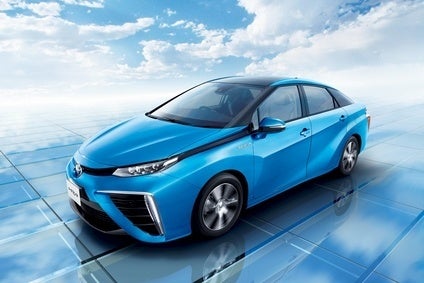
Battery powered electric vehicles have no practical future as a long range alternative to conventional cars even if technological breakthroughs allow them to be charged quickly, according to Toyota’s top fuel cell engineer.
Yoshikazu Tanaka, chief engineer of Toyota’s Mirai hydrogen fuel cell car, said even if fast charging was available, it would use so much energy at once as to defeat the purpose of the EV as an ecologically sound form of transportation.
Go deeper with GlobalData


Discover B2B Marketing That Performs
Combine business intelligence and editorial excellence to reach engaged professionals across 36 leading media platforms.
“If you were to charge a car in 12 minutes for a range of 500km (310 miles), for example, you’re probably using up electricity required to power 1,000 houses,” Tanaka told reporters at the first test drive event for the production version of the Mirai.
He added: “Toyota isn’t denying the benefits of EVs but we think the best way to use them is to charge them at night (to avoid peak power consumption hours) and use them for short distances during the day.”
Toyota said hydrogen fuel cell vehicles (FCVs) offer the most promising zero emission alternative to conventional cars since they have a similar driving range and refueling time.
While they require massive investment and government subsidies for fuelling stations, Tanaka noted that hydrogen – the most abundant element in the universe – could be extracted from many different sources and had the advantage of being portable and more easily stored than electricity.
He noted that the southern Japanese city of Fukuoka last month completed a fuelling station that uses hydrogen made from sewage and which could power about 70 Mirai FCVs a day.




