
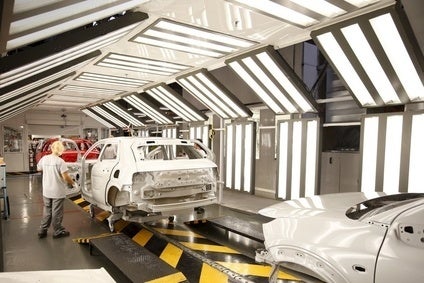
PSA Peugeot Citroën has announced that it will be increasing output in its European plants in response to higher demand.
Recent market data shows that car demand in Europe has picked up in response to stronger economic output across the region, boosted by lower oil prices and improved consumer sentiment.
Go deeper with GlobalData


Discover B2B Marketing That Performs
Combine business intelligence and editorial excellence to reach engaged professionals across 36 leading media platforms.
PSA also maintains that demand for its recently introduced models is high.
The company says that more than 60,000 additional PSA vehicles will be produced in Europe this year by the end of August 2015, meaning that volumes will be 10% higher than initially planned for the period.
Volumes will increase for all three of the PSA group’s brands – Peugeot, Citroën and DS.
Citroën said that it will raise the number of Citroën C4 Cactus cars manufactured in Madrid – a model which exceeds its targets with orders totalling nearly 30,000 since January – by 9,000 units over the period.
The Peugeot line-up will also be ramped up, with additional volumes planned for the 208, 2008 and 308, including the 308 SW version.
The number of DS 3 units manufactured in Poissy, France will also increase, as will volumes across the group’s range of utility vehicles.
As part of the plan to increase production, operations will be stepped up at the PSA 0Group’s engine and gearbox plants in France, as well as at its foundries and in its sales networks.
PSA said that the increase in production will lead to work schedule adjustments and, in certain cases, to the short-term deployment of additional teams and the hiring of temporary workers.
Denis Martin, Executive Vice President, Operational Director Europe, said: “Growth in the European market is very good news for the entire automotive industry, from plants to dealership networks to suppliers. It’s having a real turbo effect on PSA’s performance. The positive development we’re seeing in the market today means we can step up execution of the Back in the Race plan, which was based on the assumption that the market would remain flat. With the support of our suppliers, and thanks to the flexibility provided for in the agreements signed with employee representatives, we are mobilising all our resources to meet demand from our customers.”




