
Toyota is planning a ten-fold increase to production volumes of fuel-cell stacks and hydrogen tanks post-2020.
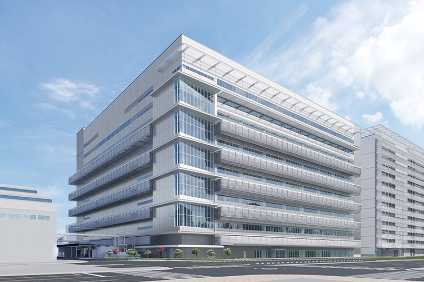
A newly constructed building at Honsha Plant will house FC cell stack production and Toyota’s Shimoyama Plant will add a new line dedicated to the mass production of high-pressure hydrogen tanks.
Go deeper with GlobalData


Discover B2B Marketing That Performs
Combine business intelligence and editorial excellence to reach engaged professionals across 36 leading media platforms.
Toyota said it sees global sales of fuel-cell electric vehicles (FCEV) increasing significantly after 2020, to at least 30,000 per year from today’s 3,000.
To prepare for this growth, the company unveiled plans for two major new facilities today: a brand-new building near its original automobile factory for expanding fuel cell stack mass production, and a new line in an existing plant to manufacture high-pressure hydrogen tanks.
The FC stack is what generates the on-board electricity from hydrogen and oxygen which propel FCEVs with zero emissions, and the tanks store the hydrogen fuel. Manufacturing both components at scale is critical to achieving lower system costs and wider availability for further growth and sales of FCEVs.
Expansion of production facilities
To increase FC stack output, Toyota will move production from its current location, within one of the existing buildings at its Honsha Plant in Toyota City, to a brand-new, eight-floor high-tech facility on the same premises, near the original site of the company’s very first automobile factory in 1938.
The production of high-pressure hydrogen tanks will be handled by a new, dedicated line to be added inside the nearby Shimoyama Plant (No. 3) in Miyoshi City (Aichi Prefecture). Previously, the hydrogen tanks were assembled at the Honsha plant on a smaller scale. Toyota’s hydrogen tanks are made of extra-thick carbon fiber and are built to withstand major impacts.
Toyota says the new facilities are expected to help significantly reduce CO2 emissions during the production stage. This is one of the initiatives for the ‘Plant Zero CO2 Emissions Challenge’ in the Toyota Environmental Challenge 2050 announced in October 2015.
Construction of the new hydrogen tank line at Shimoyama is starting now, while the exterior for the new stack production facility is already finished and work will now begin on the interior. Details of the respective facilities will be announced later with a view to start operations around 2020.
Expanding FCEV sales to more countries and regions
Toyota maintains that as a technology, ‘fuel cells are mature and ready to scale up’. Toyota introduced a fuel cell sedan, the Mirai, in December 2014. Annual production and sales have increased yearly, going from about 700 units in 2015, to around 2,000 units in 2016, and, most recently, approximately 3,000 units in 2017. However, Toyota says that in order to encourage more widespread use of hydrogen-powered zero-emission vehicles, popularisation needs to start by the 2020s. Toyota aims for annual sales of FCEVs to top 30,000 units globally from around that time.
At present, Mirai is sold in eleven countries: Japan, the United States, and nine countries in Europe. Toyota says it is working to develop an environment that will allow FCEVs to be sold in more countries and regions in the future. As part of this, demonstration tests of Mirai are currently under way in Australia, Canada, China, and the U.A.E., and Toyota is examining demand for FCEVs while continuing to help with initiatives to promote hydrogen infrastructure development.
In the Japanese market, Toyota aims to reach sales of at least 1,000 FCEV units per month and over 10,000 units annually, from around 2020. Sales regions within Japan will be expanded further from the current four major metropolitan areas to allow even more customers to enjoy Mirai.
On the commercial side, Toyota started sales of FC buses to the Tokyo Metropolitan Government in February 2017, and introduced the final version, the Sora, in 2018 with three additional units. Toyota aims to sell at least 100 such buses ahead of the Olympic and Paralympic Games Tokyo 2020.
Toyota also said it will expand its FCEV product range and continue to strengthen product appeal, aiming to bring the cost down. Also, Toyota said it will keep working with Toyota Group and other companies to develop a hydrogen supply infrastructure and construct a low-carbon hydrogen supply chain. Through these and other initiatives, the company is actively contributing to the realization of a hydrogen-based society.




