
Malaysia’s new vehicle market expanded by 5.5% to 72,509 units in November 2025 from 68,749units a year earlier, according to registration data released by the Malaysian Automotive Association (MAA). The market was lifted by a sharp rise in battery electric vehicle (BEV) sales ahead of the expiry of import and excise duty exemptions at the end of December, and by end-of-year promotional campaigns.
Go deeper with GlobalData


Discover B2B Marketing That Performs
Combine business intelligence and editorial excellence to reach engaged professionals across 36 leading media platforms.
The Malaysian economy expanded by 5.2% year-on-year in the third quarter of 2025, up from 4.4% in the second quarter, driven mainly by stronger exports and higher government spending. Household spending growth moderated to 5.0% from 5.3%. The central bank has left its benchmark interest rate unchanged at 2.75% since the 25-basis-point cut in July, its first cut since it last hiked in April 2023.
In the first eleven months of 2025, the vehicle market declined by just over 1% to 727,836 units from a record high of 736,317 units in the same period last year, with light passenger vehicle sales falling slightly to 673,751 units, while commercial vehicle sales dropped by 11% to 54,085 units. Total vehicle production in the country fell by 6% to 680,173 units in this period.
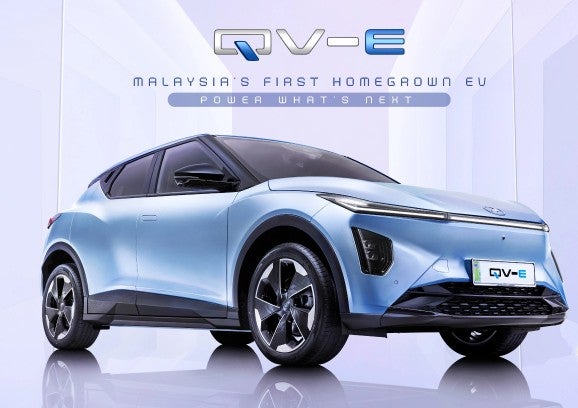
Separate industry data show that battery electric vehicle (BEV) sales in the country surged threefold to 5,417units in November, resulting in an 85% increase to 36,690units year-to-date, driven mainly by China’s BYD and its Denza brand with 11,961 units combined, the recently launched Proton e.MAS7 with 7,740 sales, and Tesla with 5,467 units. Proton recently launched the smaller e.MAS 5 BEV, while Perodua launched its QVE battery-powered compact crossover vehicle earlier this month.
Market leader Perodua’s sales declined by less than 1% to 322,867units in the first eleven months of the year, in line with the overall vehicle market performance, with the Bezza and Axia its two best-selling models.
Proton’s global sales increased by almost 4% to 143,322 units year-to-date, including a 37% increase in exports to 5,014 units. The Saga was by far its best-selling model with 66,038 sales, followed by the Geely-based X50 compact SUV with 25,974 units, with an all-new model launched in July.
UMW Toyota reported a 10% decline in wholesale deliveries to 88,133 units in this period, with the Vios and Hilux its best-selling models.




