
Skip to site menu Skip to page content

Daily Newsletter

10 December 2025

Daily Newsletter

10 December 2025

How clean are PHEVs? Talking emissions with PHINIA

It has been suggested that plug-in hybrids (PHEVs) may not be as kind to the environment as their certified emissions values state.

Frankie Youd December 10 2025

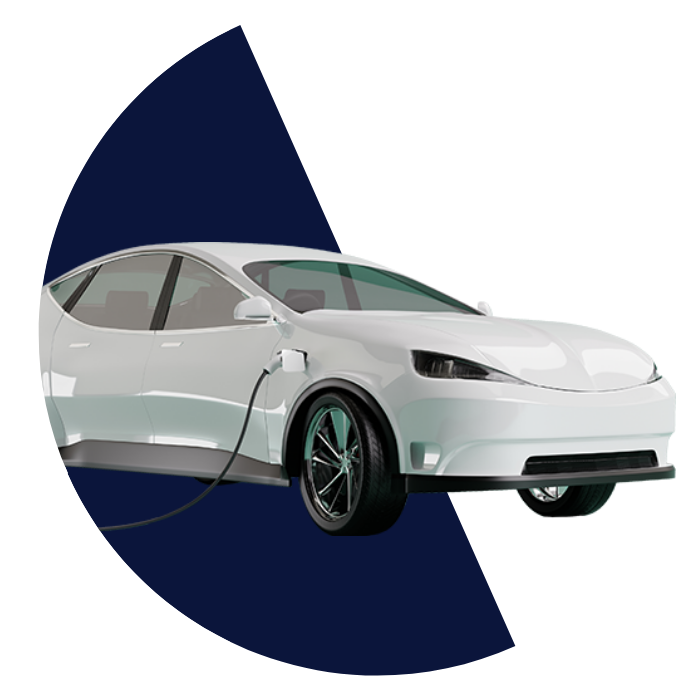
In a recent report from Transport & Environment (T&E), data found that real-world CO₂ emissions of plug-in hybrid vehicles (PHEVs) are, on average, five times higher than their official certification values, with the gap predicted to be gradually increasing.

The report also highlights that ICE vehicles will remain an important player in the global vehicle market for years to come, even as EVs and PHEVs grow in numbers and popularity.

 Alongside this, fuel systems development company, PHINIA, has recently launched its 2025/2026 Global Emission Standards Booklet for Light-Duty Vehicles, a 30-year-legacy resource for OEMs and industry professionals tracking emissions, fuel and powertrain regulation across major global markets. The release of the report aims to assist OEMs navigating the regulatory landscape, offering guidance for design and manufacturing to ensure powertrains are compliant and also future-proof.

We spoke to Todd Anderson, CTO, PHINIA, to discuss the future of powertrain design and the Transport & Environment report.


Todd Anderson, CTO, PHINIA

Just Auto (JA):  Could you discuss the recent report from Transport and Environment and what it highlights for CO2 emissions produced by PHEVs?

Todd Anderson (TA): The recent report from the European Federation for Transport and Environment (T&E)  shines a light on a common misconception. Plug-in hybrid electric vehicles (PHEVs) are far less sustainable than reports often suggest. The T&E data showed that their real-world CO2 emissions are, on average, almost five times higher than the official Worldwide Harmonized Light Vehicle Test Procedure (WLTP) standard. 

Even when PHEVs are in electric mode, the internal combustion engine (ICE) often has to kick in during acceleration, at higher speeds, or uphill. This means that, in practical terms, PHEVs closely compare to conventional hybrids and diesel-powered vehicles, even though WLTP tests suggest emissions are 75% lower. 

The report also highlights that certain design choices exacerbate this issue. Heavier vehicles with long electric ranges and relatively small electric motors show the largest gaps – sometimes emitting six times more CO2 than the certified figures suggest. Beyond the climate impact, this also costs drivers money: real-world fuel and energy costs can be hundreds of euros higher per year than WLTP estimates imply. 

In short, the report underscores that ICE will remain an important component of the global vehicle mix for decades to come, even with the growth of EVs and PHEVs. At PHINIA, we believe that ICE, when combined with alternative fuels, will remain a viable solution for the transition to carbon neutrality.  We need a pragmatic path forward – one that encompasses incremental changes today to power a cleaner tomorrow.

How does this real-world data and certified data differ and why does this matter?

The difference comes down to assumptions versus reality. Certified WLTP figures are based on laboratory tests with standardised assumptions about how much of the driving will be done in electric mode and how often the vehicle will be charged. Currently, WLTP assumes that a PHEV drives 84% of its kilometres in electric mode. The real-world data shows it’s closer to 27%, meaning the car relies on its combustion engine far more often than regulators assumed. 

Acknowledging this discrepancy is significantly important. First, it means that official numbers significantly underestimate emissions. Second, it gives some manufacturers an unfair advantage in meeting EU CO2 targets, even though their vehicles emit far more emissions than predicted. And finally, it has broader implications: if the utility factor isn’t corrected, a focus on PHEVs alone could delay Europe’s ability to achieve a 90% reduction in transport-related emissions by 2050. 

How are global regulations and deadlines influencing powertrain design, strategies and fuel systems?

Global emissions regulations are becoming increasingly stringent, with deadlines accelerating for CO2 reduction and fleet-wide compliance. This is influencing every aspect of powertrain design, from hybridisation strategies and battery integration to fuel system optimisation. OEMs must ensure that new vehicles are compliant not only at certification level, but across their entire operational lifecycle. 

Importantly, regulations should promote technology neutrality, recognising the role of efficient ICE vehicles alongside electrification. This is particularly so for use cases in manufacturing, heavy industry, and transportation, in which fully electric solutions are constrained by infrastructure, economics, or load requirements. Cleaner ICE vehicles running on alternative fuels such as biofuels, hydrogen, HVO, or e-fuels, offer a scalable, faster route to emissions reductions while leveraging existing assets and supply chains. Policies like the EU Clean Industrial Deal and Innovation Fund support these hybrid approaches, incentivising both new and optimised technologies. 

PHINIA’s 2025/2026 Global Emissions Standard Booklet helps OEMs navigate this complex regulatory landscape. By integrating regional requirements into design strategies, manufacturers can deploy powertrains and fuel systems that are both compliant and future-proofed, ensuring reductions are achieved pragmatically and at scale. 

How important is global regulatory guidance for OEMs?

Global regulatory guidance is essential because automotive development is long-cycle and capital-intensive. Misalignment with regulations in even a single market can lead to costly redesigns, delayed launches, and compliance penalties. Up-to-date guidance helps OEMs anticipate changes and embed compliance into product design from the start.

Guidance also shapes strategic decisions around fuel-agnostic technologies. Electrification, hydrogen combustion, and optimised ICE vehicles can coexist to meet decarbonization goals, but only if policies provide clarity, incentives, and access to infrastructure. Without this guidance, OEMs risk investing in solutions that are technically sound but commercially or regionally impractical.

PHINIA’s latest Emissions Standard Booklet consolidates regulations across 30+ years and multiple regions, providing OEMs with a single reference point to make informed decisions on hybrid strategies, alternative fuels, and ICE optimization. This empowers manufacturers to reduce emissions while maintaining competitiveness and resilience.

What does the industry, OEMs specifically, need to focus on to adhere to regulations and ensure that real-world performance matches certifications? 

OEMs need to focus on three core areas: realistic testing, fuel-agnostic powertrain design, and regulatory foresight. Testing should reflect real-world driving conditions to ensure PHEVs, hybrids, and ICE vehicles meet expectations outside the lab. Meanwhile, powertrain and fuel system design must embrace technology neutrality – ensuring both hybrid solutions and more sustainable ICE vehicles, when combined with alternative fuels, are deployed where they will have the most practical and scalable impact.

Fuel-agnostic powertrain design to enhance access to alternative fuels is critical. Hydrogen, e-fuels, biofuels, and HVO provide immediate decarbonization opportunities when integrated into optimized ICEs or hybrid vehicles, offering faster emissions reductions in regions or segments where full electrification are less viable. PHINIA’s hydrogen fuel system demonstrates the practicality of H2ICE solutions for light- and heavy-duty vehicles, bridging near-term decarbonization gaps while longer-term electrification strategies mature.

Finally, regulatory intelligence and practice planning are essential. By leveraging PHINIA’s Emission Standards Booklet and aligning developments with global frameworks, OEMs will have the confidence to ensure compliance with current regulations, anticipate future changes, and deliver emissions reductions reliably across markets. This balanced, fuel-agnostic approach will accelerate sustainability while maintaining operational and commercial viability.

Uncover your next opportunity with expert reports

Steer your business strategy with key data and insights from our latest market research reports and company profiles. Not ready to buy? Start small by downloading a sample report first.

Newsletters by sectors

close

Sign up to the newsletter: In Brief

Visit our Privacy Policy for more information about our services, how we may use, process and share your personal data, including information of your rights in respect of your personal data and how you can unsubscribe from future marketing communications. Our services are intended for corporate subscribers and you warrant that the email address submitted is your corporate email address.

Thank you for subscribing

View all newsletters from across the GlobalData Media network.

close