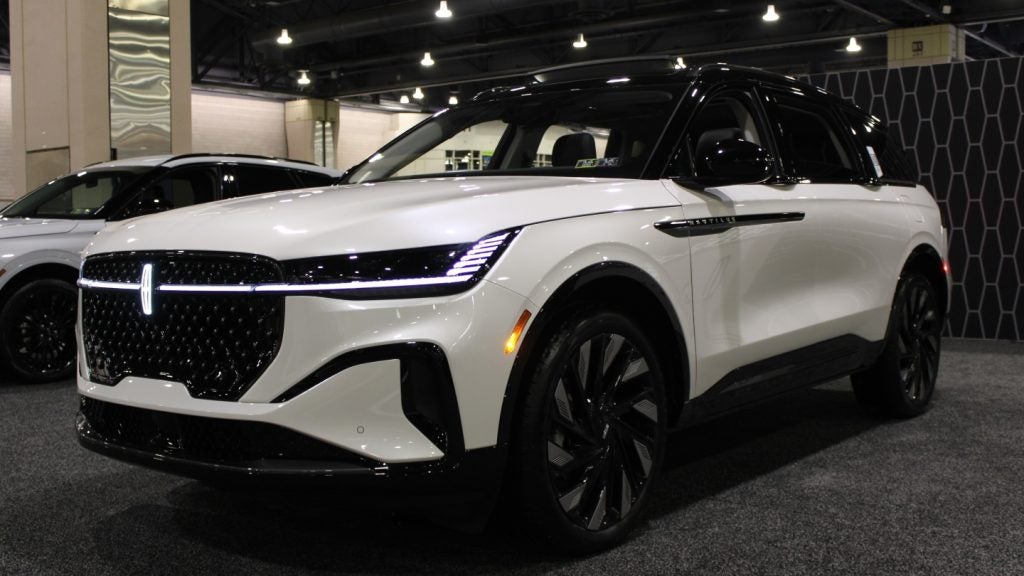
Ford Motor has applied to the US Commerce Department for a waiver to keep importing its China-built Lincoln Nautilus SUV under new federal software restrictions, reported Reuters.
The automaker confirmed that while the Nautilus's software is developed in the US, its installation occurs in China – a distinction that places the vehicle within the scope of the new regulations and necessitates government authorisation.
The rules, adopted in January 2025 under former US President Joe Biden on national security grounds, prohibit the use of software developed or maintained by Chinese entities in connected vehicles, and also cover companies with substantial Chinese ownership.
Software restrictions apply from model year 2027, with hardware-related provisions following from model year 2030.
Ford said it expects to begin importing 2027 model year Nautilus vehicles in January, leaving it several months to obtain approval.
The Commerce Department does not publicly disclose individual authorisation requests or outcomes, making the broader scale of industry applications difficult to assess.
The Nautilus is among a limited number of Chinese-manufactured models that were already being sold in the US prior to the rules coming into force.
Other automakers facing potential exposure include Polestar, in which China's Geely holds a majority stake, and General Motors (GM), which produces the Buick Envision in China.
Neither company confirmed whether it had filed an application, the report added.
Polestar said it is engaging with US authorities to meet the new requirements, while GM has announced plans to move Envision production to a Kansas facility from 2028.
Volvo Cars, also majority-owned by Geely, disclosed in May that it had already received an authorisation, though it noted ongoing compliance obligations across its US model range.
The forthcoming hardware ban is seen as presenting a more significant challenge, requiring automakers to substantially reduce their dependence on Chinese supply chains.
GM has already set a 2027 deadline for certain suppliers to eliminate Chinese-sourced components from their supply chains.
According to the report, parts suppliers are also affected by the measures.
Tyre maker Pirelli flagged that one of its products risked falling under the restrictions due to the significant shareholding held by a Chinese investor; the Italian government responded by curtailing that shareholder's board representation.
Pirelli confirmed in May that it would begin producing the affected product at a US plant.
Legislators have put forward proposals to strengthen the restrictions further. The Trump administration has maintained the rules introduced by its predecessor.