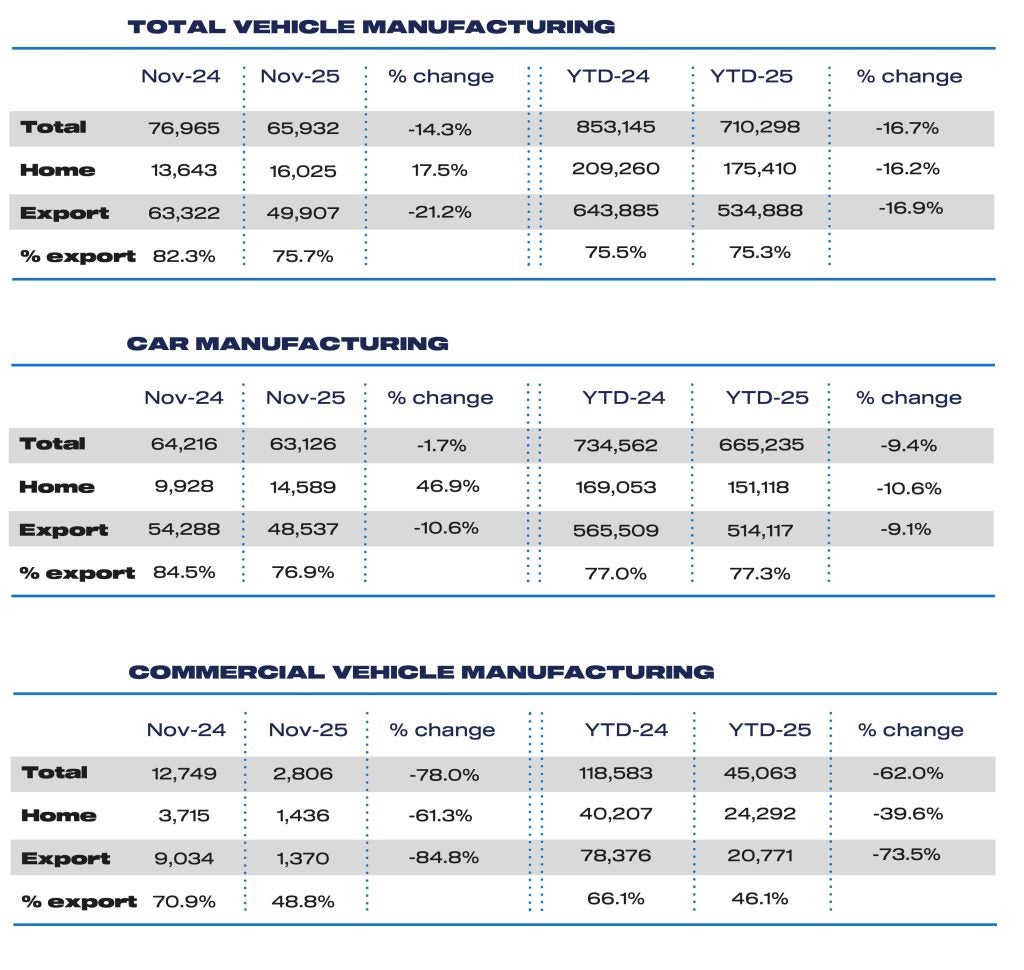
UK vehicle production fell by 14.3% in November with 65,932 units leaving factory lines, according to figures published by the Society of Motor Manufacturers and Traders (SMMT).
The decline was driven by a slight reduction in car output, down 1.7% to 63,126 units, and a much steeper 78.0% drop in commercial vehicle (CV) output, with just 2,806 units produced, some 9,943 fewer than in the same month last year.
Go deeper with GlobalData


Discover B2B Marketing That Performs
Combine business intelligence and editorial excellence to reach engaged professionals across 36 leading media platforms.
While it was the fourth successive monthly decline in car production, just 1,090 fewer cars were made than in the same month last year as production gradually normalises following the cyber incident at Jaguar Land Rover (JLR).
Van, truck, bus and coach volumes, meanwhile, declined for the eighth month in a row, reflecting the consolidation of two plants into one by Stellantis/Vauxhall (closure of Luton plant and upgrade of plant at Ellesmere Port).
Overall car production for the UK market rose by 46.9% to 14,589 units, while output for export declined 10.6% as shipments to the top five export markets – the EU, US, Türkiye, China and Japan – all fell. In total, 48,537 cars were produced for global markets, representing more than three quarters (76.9%) of total output.
The news came in a mixed week for the sector, with the start of next generation volume electric car production in Sunderland contrasting with the European Commission’s plans to tie new additional flexibilities on CO2 targets and public subsidies for the greening of corporate fleets to cars and vans ‘made in the EU’. The SMMT noted that the proposal by the EU to permit a greater range of technologies beyond 2035 will put the UK out of step with its biggest market and biggest source of vehicles.
The SMMT said the UK needs to avoid unnecessary complexity and uncertainty for businesses considering investment decisions in the UK.