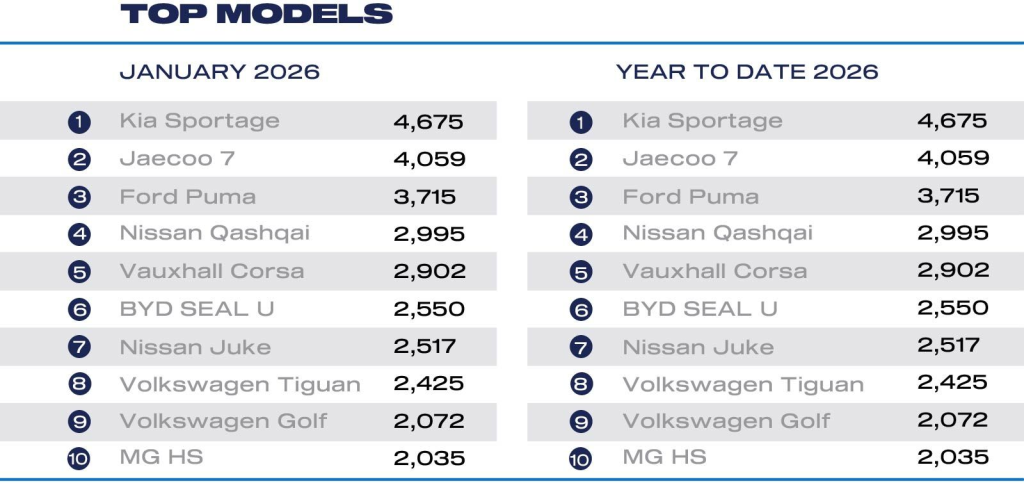
The UK new car market grew by 3.4% in January to reach 144,127 units, according to figures published by the Society of Motor Manufacturers and Traders (SMMT).
Go deeper with GlobalData


Discover B2B Marketing That Performs
Combine business intelligence and editorial excellence to reach engaged professionals across 36 leading media platforms.
Growth was recorded across all buyer types, with registrations by private retail buyers up 4.5% and fleets increasing by 1.6%, while the low-volume business segment rose 46.5%. Fleets remained by far the largest source of new car registrations, accounting for 61.2% of the market.
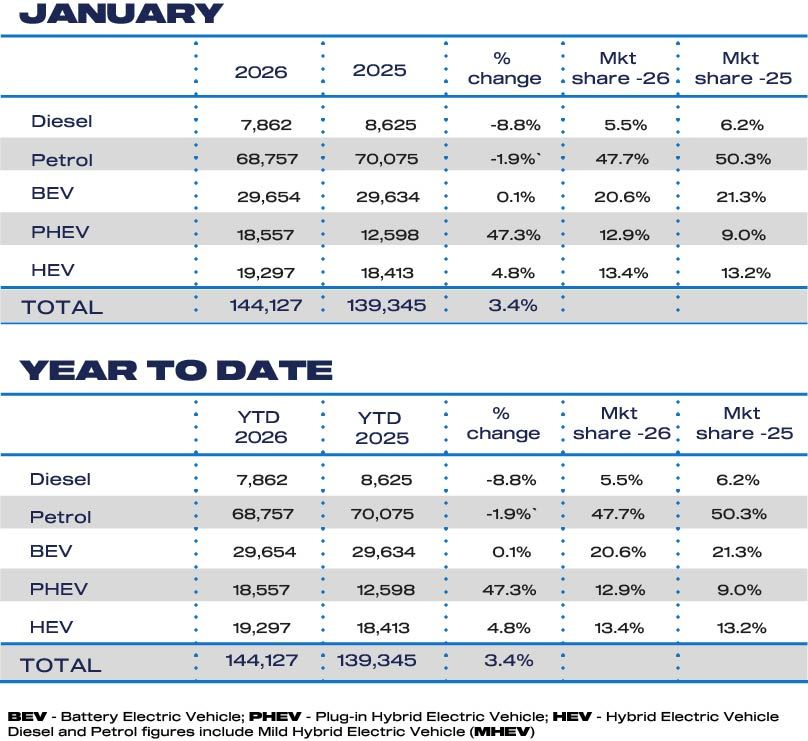
Uptake of battery electric vehicles rose just 0.1% to 29,654 units – delivering a 20.6% market share, the lowest since April 2025. The decrease follows a strong 2025 January performance when uptake was pulled forward as buyers sought to avoid April’s introduction of new tax rates on BEVs. Furthermore, the strong BEV performance at the end of 2025, with manufacturers pushing to meet regulatory targets, will also have affected the January market, the SMMT noted.
However, the SMMT also said that BEV sales are ‘certainly running behind mandated targets’ under the UK government’s Zero Emission Vehicle Mandate. The annual ZEV car sales target share for BEVs in 2026 is 33% (last year target was 28% and the industry fell well short of that at 23.4% despite heavy discounting by carmakers).
The largest growth was again recorded in plug-in hybrids (PHEVs), rising 47.3% to account for 12.9% of registrations. Rounding off electrified vehicle uptake, hybrid electric vehicles posted a 4.8% increase, comprising 13.4% of the market.
Mike Hawes, SMMT Chief Executive, said: “Britain’s new car market is building back momentum after a challenging start to the decade. It is also decarbonising more rapidly than ever and, despite a January dip in EV market share, the signs point to growth by the end of the year. “The pace of the transition, however, may be slowing and is certainly behind mandated targets. With sales of new pure petrol and diesel cars planned to end in less than four years, there needs to be a comprehensive review of the transition now, to ensure ambition can match reality.”