
Domestic sales among South Korea’s five main automakers declined by 10.6% to 107,677 units in August, from 120,400 units in the same month of last year, according to preliminary data released individually by the country’s vehicle manufacturers.
The data does not include sales by South Korea’s low-volume commercial vehicle manufacturers, including Tata-Daewoo and Daewoo Bus Corporation, which typically account for up to 2% of the domestic market combined. Also not included in the data are sales of imported vehicles, which accounted for close to 15% of the total market last year. These are covered in a separate report when the data is released later in the month.
Go deeper with GlobalData


Discover B2B Marketing That Performs
Combine business intelligence and editorial excellence to reach engaged professionals across 36 leading media platforms.
Last month’s sales decline was similar to that in July, after the government readjusted the automotive sales tax back to its normal rate of 5% at the end of June from the previously discounted rate of 3.5%.
Also, strike action at Hyundai Motor, the country’s largest vehicle manufacturer, continued in August and this also had a significant impact on the overall domestic market.
In the first eight months of the year domestic sales were up 5.3% at 1,041,086 units, from 988,512 units in the same period of last year.
Global sales among the country’s ‘big-five’ automakers, including vehicles produced overseas by Hyundai-Kia, rose by 3.1% to 641,761 in August, from 622,755 units a year earlier, with higher sales in the US and in key Asian markets more than offsetting weak sales at home.
In the first eight months of the year, global sales were 1.3% lower at 5,645,284 units, from 5,717,936 units previously, due to declining overseas sales.
Overseas sales, including overseas production by Hyundai-Kia, rebounded in August – by 6.4% to 534,084 units from 502,142 units a year earlier. Year-to-date sales were still 2.6% lower at 4,604,190 units, however, from 4,728,198 units previously.
Hyundai Motor‘s global sales dropped by 3.1% to 358,447 units in August, from 369,955 units a year earlier, reflecting a sharp drop in domestic sales and a slight fall in overseas sales.
Industrial action in South Korea continued in August, which had a significant impact on the company’s output and sales performance – particularly in its home market.
In the first eight months of the year, Hyundai’s global sales were 1.7% lower at 3,092,223 units, compared with 3,144,376 in the same period of last year, on weak overseas sales.
Hyundai’s domestic sales plunged by 17.6% to 42,112 units last month, from 51,098 units a year earlier, reflecting a softening of the market after the expiry of government incentives and also a drop in deliveries due to recent strike action. Cumulative eight-month sales were up by just 0.7% at 441,118 units, from 4,471,134 units in the same period of last year.
Overseas sales fell by just 0.7% to 316,335 units in August, from 318,694 units a year earlier, resulting in a 1.7% drop in cumulative eight-month sales to 2,650,560 units, from 2,697,079 units, despite strong sales in the EU, North America and India.
Kia Motors‘ global sales jumped by 12.2% to 219,925 units in August, from 196,032 units a year earlier, with a sharp decline in domestic deliveries offset by strong overseas sales. Cumulative eight-month global sales were 1.6% lower at 1,906,567 units, compared with 1,937,356 units previously.
Domestic sales fell by 10.4% to 37,403 units last month, from 41,740 units a year earlier, reflecting a drop in demand following the withdrawal of tax incentives at the end of June. Local deliveries in the first eight months of the year were still 7.6% higher at 358,160 units, compared with 332,978 units a year earlier.
Overseas sales jumped by 18.3% to 182,522 units last month, from 154,242 a year earlier, although cumulative eight-month volumes were 4.8% lower at 1,548,407 units – despite strong demand in the EU and North America.
GM Korea‘s global sales increased by just 0.1% to 35,971 units in August, from 35,940 units a year earlier, with weak domestic sales offset by higher exports. Cumulative global sales in the first eight months of the year were 3.4% lower at 389,460 units, compared with 403,309 units in the same period of last year.
The data does not include exports of CKD kits for assembly overseas which are significant.
Domestic sales fell by 7.7% to 12,773 units last month, from 13,844 sales a year earlier, with the Spark minicar accounting for 5,850 of these. Cumulative eight-month domestic sales were almost 17% higher at 113,912 units.
Shipments of assembled vehicles (CBUs) to overseas markets rose by 5% to 23,198 units in August, from 22,096 units a year earlier, resulting in a 9.9% drop in year-to-date exports to 275,548 units.
Renault-Samsung‘s global sales soared by over 51% to 15,240 units in August, from 10,057 units a year earlier on sharply-higher domestic sales and exports. Cumulative eight-month global sales were 12.2% higher at 157,654 units, compared with 140,565 units a year earlier.
Domestic sales increased by 24.4% to 7,713 units last month, from 6,201 units a year earlier, helped by the recent introduction of the new SM6 mid-size passenger car. This resulted in a 23.6% rise in year-to-date sales to 61,982 units. Overseas sales jumped by more than 95% to 7,527 units, from 3,856 units a year earlier, and were 5.8% higher at 95,672 units over the eight-month period.
Renault-Samsung’s exports are expected to grow strongly in the coming months, with the QM6 SUV – a new version of the QM5, set to be exported to Latin America and Australia.
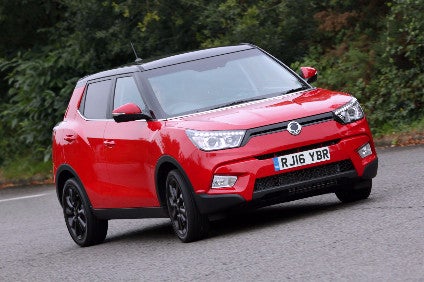
Ssangyong Motor, owned by India’s Mahindra & Mahindra, reported a 13.1% rise in sales of built-up vehicles to 12,178 units in August, from 10,771 units a year earlier, driven by strong overseas demand for the Tivoli SUV.
Cumulative eight-month global sales were 4.4% higher at 99,449 units, compared with 95,284 units in the same period of last year.
Domestic sales increased by 2.1% to 7,676 units last month, resulting in 73,594 deliveries in the first eight months of the year. Exports jumped by over 38% to 4,502 units on strong EU demand for the new Tivoli Air SUV, lifting year-to-date volumes to 33,821 units.




