
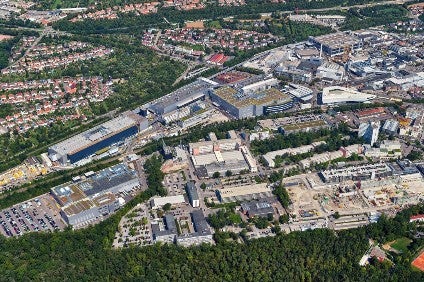
Porsche on Monday started Taycan output at a new facility for its first electric sports car at its Zuffenhausen site.
Construction took about four years.
Go deeper with GlobalData


Discover B2B Marketing That Performs
Combine business intelligence and editorial excellence to reach engaged professionals across 36 leading media platforms.
Production and logistics chief Albrecht Reimold said: "It was a deliberate decision to build the Taycan in Zuffenhausen – the home of the brand's heart and soul."
The automaker calls it a "factory of the future" – flexible, networked and using 4.0 production technology – and a further step towards the "zero impact iactory" with no negative environmental impact as it's CO2-neutral.
Electricity comes from renewable sources and biogas generates heat wile the new production buildings are energy-efficient.
Logistics vehicles are electric, waste heat is used for drying in the paint shop and roof areas are 'green'.
Porsche built new body and paint shops, a plant for electric motors and components, a vehicle assembly hall and connecting transport.
The total building area is 170,000 square metres.
Ground was broken in 2015 for the new body shop, which also builds 911 shells and old buildings were demolished in 2016 to create space for the new paint shop and the multi-storey assembly building.
Stuttgart city imposed sustainability conditions as part of the planning conditions and material from the demolished halls was reused for the new buildings as a result.
"We've built a factory inside a factory – in the middle of the city and close to our neighbours, in the most confined of spaces, in the shortest possible time and without disrupting the existing sports car production facility running at full capacity," said Reimold.
Four kilometres of new road were also built within the plant.




