
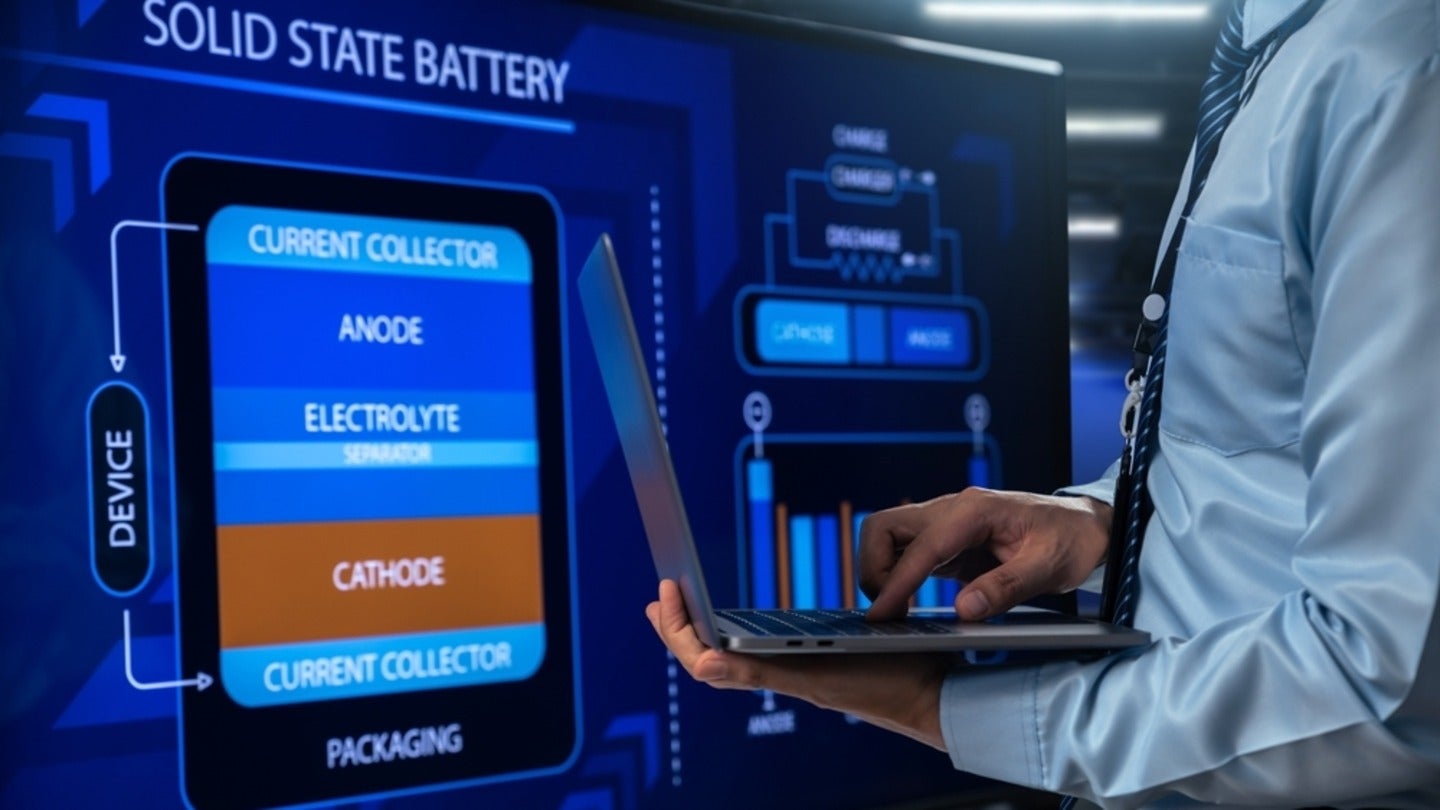
Japanese automaker Toyota leads in solid-state battery patents, having been awarded some 8,274 solid-state battery grants over the past three years, according to GlobalData’s patent analytics.
LG Corp, whose affiliated company LG Energy Solution supplies EV batteries to Toyota, claims runner-up position with 5,539 solid-state battery patent grants identified between October 2020 and October 2023.
Go deeper with GlobalData


Discover B2B Marketing That Performs
Combine business intelligence and editorial excellence to reach engaged professionals across 36 leading media platforms.
Other automakers active in solid-state battery innovation include Hyundai, Kia and Honda.
Toyota “breakthrough” in solid-state battery technology
In September, Toyota revealed that it had made a “breakthrough” in solid-state battery technology, causing it to shift its “development focus to mass production”.
Solid-state batteries, which have a higher energy density than a lithium-ion battery, have been heralded by some industry experts as a potential solution to EV battery concerns such as charging time, driving range, and fire risk. Toyota eventually plans to produce vehicles with a 932mi (1,500km) range and less than 10-minute charging times. In comparison, the Tesla Model Y has a maximum 330mi range and 15-minute charging time.
Last month, Toyota announced that it had inked a deal with petrochemicals company Idemitsu to mass produce solid-state batteries, with the successful commercialisation of the technology planned for 2027-28. The collaboration will focus on sulfide solid electrolytes – seen as a promising material to achieve high capacity and output for BEVs.
If successful, Toyota could disrupt an industry currently dominated by Tesla and China’s BYD and CATL, potentially alleviating Western anxiety about Chinese dominance in EV battery tech.
One of the key stumbling blocks for mass production of the technology to date has been the assembly process, in which layers of anode-cathode cells need to be stacked quickly and carefully, while other hurdles include the batteries’ moisture and oxygen sensitivity and generating sufficient mechanical pressure to prevent the formation of dendrites.
Indeed, other automakers have approached solid-state battery technology with more caution, as some analysts dismiss Toyota’s progress as no more than “a hyped-up research project.”
Volvo Cars CEO Jim Rowan told CNBC, for example, that he believed solid-state battery technology to be still “some years off”.
“I think there’s many more incremental benefits that we’re going to see with the current electrical propulsions systems, that [are]… just going to continue to drive performance,” Rowan said.
Toyota has widely been dubbed a laggard in EV development, with just two BEVs (the bZ3 sedan and bZ4X crossover) on the market, and has been criticised for lobbying against decarbonisation policies. A 2021 research report by the Sierra Club, for example, found that Toyota lobbied senators to weaken greenhouse gas standards in the US and worked to block clean energy investments in Japan.
The company now appears to be relying on the development of market-unproven breakthrough technologies to leapfrog over its Chinese and US competitors.
Our signals coverage is powered by GlobalData’s Thematic Engine, which tags millions of data items across six alternative datasets — patents, jobs, deals, company filings, social media mentions and news — to themes, sectors and companies. These signals enhance our predictive capabilities, helping us to identify the most disruptive threats across each of the sectors we cover and the companies best placed to succeed.



