
Malaysia’s new vehicle market declined by over 19% to 52,414 units in February 2026 from 65,052 units in the same month last year, according to registration data released by the Malaysian Automotive Association (MAA).
Last month’s sharp decline followed a 27% surge in January, with registrations held back by significantly fewer working days due to the timing of this year’s Lunar New Year holidays, falling in February this year rather than January last year. In the first two months of 2026, the vehicle market increased slightly to 116,712 units, from 115,501 units in the same period last year.
Go deeper with GlobalData


Discover B2B Marketing That Performs
Combine business intelligence and editorial excellence to reach engaged professionals across 36 leading media platforms.
Consumer sentiment has strengthened in recent months, which is reflected in a pickup in economic growth in the country to 6.3% year-on-year in the fourth quarter of 2025, from 5.4% growth in the third quarter, driven by much stronger domestic consumption, investment, and exports. In the whole of 2025, the economy expanded by a much faster than expected 5.2%, albeit up just slightly on the 5.1% growth seen in 2024.
Light passenger vehicle sales rose by 1% to 109,117 units in the first two months of 2026 from 108,339 units a year earlier, while commercial vehicle sales increased by 6% to 7,595 units from 7,162 units. Separate industry data shows battery electric vehicle (BEV) sales rose by 154% to 9,870 units in this period from 3,850 units a year earlier, led by the recently launched Proton eMas 5 with 4,630 units, followed by the Geely Zeekr 7X with 568 units, and the BYD Atto 3 with 558 units.
Vehicle production in the country fell by 7% to 110,607 units in the first two months of the year, from 119,540 units a year earlier.
Malaysia’s vehicle market is expected to rebound in March following the sharp decline in February, but sales over the full year are expected to weaken. GlobalData is forecasting an almost 6% drop in light vehicle sales to 779,000 units in 2026, down from 827,000 units last year, with sales stabilizing at 780,000 units in 2027.
Market leader Perodua’s sales fell by 9% to 49,703 units in the first two months of 2026, despite the recent launch of the new Traz compact SUV, based on the Toyota Yaris Cross, and its first BEV model, the QV-E, in December.
Proton reported a 58% jump in global vehicle sales to 33,399 units year-to-date from weak year-earlier levels, with the Saga by far its best-selling model with 16,332 units, followed by the battery-powered eMas 5 with 4,630 units and the Geely-based X50 compact SUV with 4,271 units.
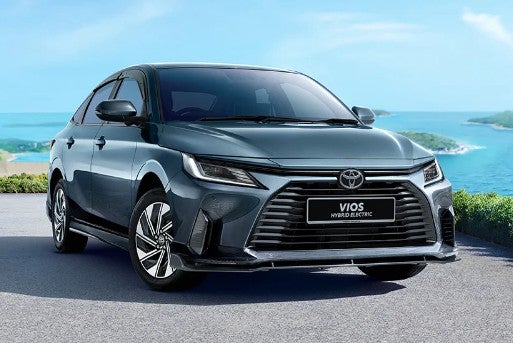
Toyota registrations rose by 13% to 13,591 units in the two-month period, helped by the recent introduction of the new Vios Hybrid and the updated Corolla Cross HEV models.




