
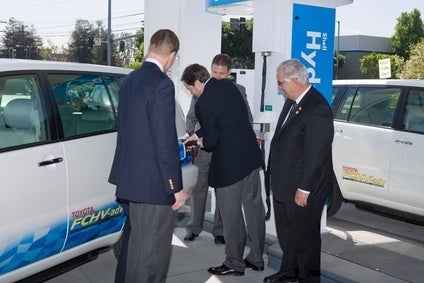
Three major carmakers are to work together to help accelerate the development of hydrogen station infrastructure for fuel cell vehicles (FCVs).
An infrastructure is currently lagging development of the vehicles and, following the formulation of its Strategic Road Map for Hydrogen and Fuel Cells in June 2014, the Japanese government has highlighted the importance of developing a hydrogen station infrastructure as quickly as possible in order to popularise FCVs.
Go deeper with GlobalData


Discover B2B Marketing That Performs
Combine business intelligence and editorial excellence to reach engaged professionals across 36 leading media platforms.
Toyota, Nissan and Honda have agreed to work together although they will not announce specific measures until a later date. Infrastructure companies are making efforts to build infrastructure, but they face difficulties in installing and operating hydrogen stations while FCVs are still not common on the road.
The Japanese government is supporting the installation of hydrogen stations by means of subsidies, but has also resolved to introduce a range of additional policies aimed at promoting activities that generate new demand for FCVs, including partially subsidising the cost of operating hydrogen stations.
The three carmakers hope to both popularise FCVs and ensure that it will be easy to refuel them. They recognise the need for vehicle manufacturers to promote the development of hydrogen station infrastructure alongside the government and infrastructure companies.




