
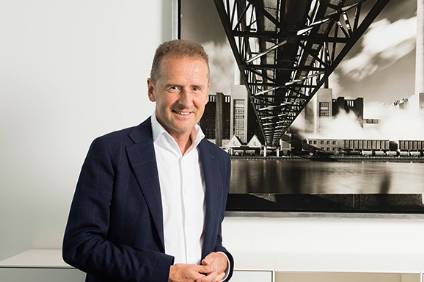
The European Union’s latest targets for average CO2 reduction for new cars by 2030 translate to a much higher share in the market for electric vehicles according to Volkswagen CEO Herbert Diess.
Reuters reported remarks by Diess in response to EU plans to cut CO2 emissions from cars by 37.5% by 2030.
Go deeper with GlobalData


Discover B2B Marketing That Performs
Combine business intelligence and editorial excellence to reach engaged professionals across 36 leading media platforms.
A deal has been struck by EU member states and the European Parliament that sets a 37.5% average reduction – versus today’s average – for cars by 2030 (vans at 31% reduction). European trade body ACEA has warned that the target is ‘totally unrealistic based on where we stand today’. Moreover, it said industry deplores that this 2030 target is ‘driven purely by political motives, without taking technological and socio-economic realities into account’.
The Reuters report also said that the latest EU target is more than the 30% VW expected and would translate into a share for electric vehicles of more than 40 percent of total vehicle sales in 2030, according to Diess.
Diess also suggested that VW would have to speed up its electrification programme. “This means that our planned restructuring programme, which is needed to address this systemic change, is not yet sufficient,” Diess reportedly said.
Reuters also noted that German Economy Minister Peter Altmaier said the targets were at the limit of what was technically and economically feasible. German companies, such as Siemens, have warned that Germany’s automotive sector is highly geared to incumbent ICE technologies and faces big challenges to maintain employment levels as automotive electrification rises.
The German automotive trade association VDA has criticised the new EU targets and said there should be a lack of a clear roadmap.
The VDA has said that EU targets are very ambitious – and the most demanding target anywhere in the world – compared with China, Japan or the US. It has said that 35-40 percent would be ‘unrealistically high’ and an ‘excessive target for the industry’.
The VDA also said that the latest targets ‘are not feasible either technologically or economically within the period envisaged’.
The VDA has also said that the evolution of the market for e-vehicles will depend on many factors: battery costs, the charging infrastructure, fuel prices and public procurement.
See also: ACEA expresses ‘serious concern’ on EU CO2 targets
Siemens boss issues stark warning on e-mobility




