
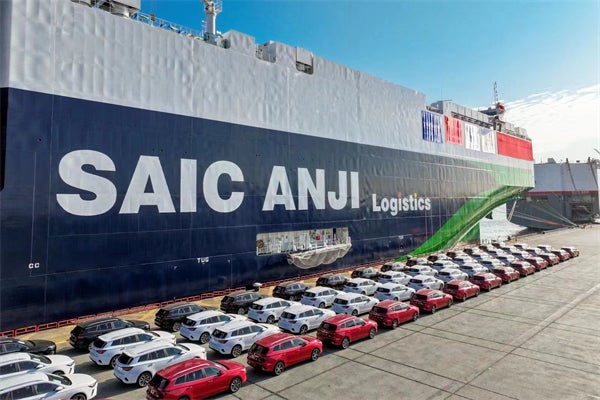
The European Commission (EC), the executive body of the European Union (EU), has tentatively agreed to impose minimum retail prices on Chinese battery electric vehicles (BEVs) sold in the region, replacing the import duties currently in place which are designed to counter unfair competition due to Chinese government subsidies and advantages in terms of technology and production costs. The EU’s import tariffs currently range between 8% and 35%, depending on the automaker.
Following more than a year of anti-subsidy investigations, the EC looks to have agreed to switch from imposing import duties to putting a floor under the prices of Chinese BEVs sold in the EU, to offset the unfair advantages that Chinese automakers currently enjoy. These minimum prices would be negotiated individually at brand and model level.
Go deeper with GlobalData


Discover B2B Marketing That Performs
Combine business intelligence and editorial excellence to reach engaged professionals across 36 leading media platforms.
Import duties have been a significant source of trade tensions between the EU and China, and the two sides have held ongoing talks to seek an alternative to import tariffs.
The EC suggested that Chinese exporters “submit price undertaking offers,” which it said “must be adequate to eliminate the injurious effects of the subsidies and provide the equivalent effect to duties.” The commission also said it would require Chinese automakers to provide planned annual shipment volumes and planned future investments in the EU.
While imposing minimum retail prices would help limit sales volumes of Chinese BEVs in the EU, it would also help make Chinese automakers more profitable and arguably would also help lift their brand and product image.




