
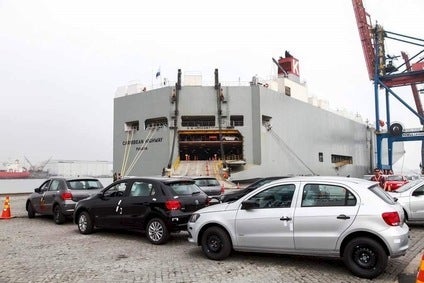
Although results are not yet discernible, Brazilian auto makers and their supporting components industry reckon the real's escalating against the US dollar will see a gradual recovery of export sales. It's been a while since Brazilian cars and parts were competitively priced in other markets and recovery is likely to be slow, not least due to a lack of new free-trade agreements (FTAs). Brazil has just signed its first with north western neighbour Colombia and another with Uruguay, on the southern border.
Exports to Mexico (with which Brazil has a somewhat restricted FTA), for example, have risen 50% this year so far compared to the same period in 2014. Brake pads maker Federal Mogul shipped 30% more and opened up three new markets: Chile, Paraguay and Uruguay.
Go deeper with GlobalData


Discover B2B Marketing That Performs
Combine business intelligence and editorial excellence to reach engaged professionals across 36 leading media platforms.
A handful of economists have said previously the Brazilian economy's recovery would come first from exports.
For Frank Sowade, production director at Volkswagen's São Bernardo do Campo plant, and president for SAE Brazil, this would certainly provide some dynamism to the economy as other world markets react to their own downturns.
"The country lacks the competitiveness to compete on equal terms with the rest of the world, especially in regard to the high costs spread throughout the whole supply chain. This demands strength and focus on actions to boost exports. This would leverage industrial activity in Brazil, still a labour-intensive country," he said.
Supporting factors also need reviewing, such as the burden from transfer price calculations, introduced to avoid under-priced exports. There is currently electronic cross-checking to detect any misconduct.
A simplification of the drawback system is also needed for both local and foreign purchasing (with a tax exemption) which potentially would increase vehicle exports.




