
Delphi says harnessing ways of coping with infrastructure management will be key as a greater push to autonomous driving sees a radical shift in the way transportation is perceived.
Global car production is continuing to increase as the pace of global recovery – fledgling in Europe’s case – starts to pick up with some predicting output could rapidly reach 100m units per year.
Go deeper with GlobalData


Discover B2B Marketing That Performs
Combine business intelligence and editorial excellence to reach engaged professionals across 36 leading media platforms.
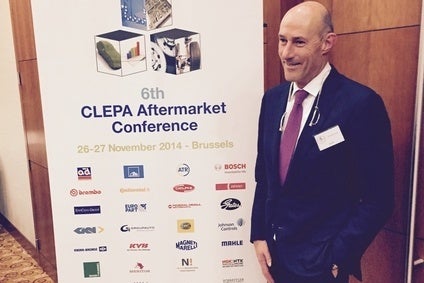
“We are already, in terms of building blocks, in autonomous driving today,” Delphi Europe, Middle East and Africa, president, Michael Gassen, told just-auto on the sidelines of this year’s CLEPA Aftermarket Conference in Brussels.
“Part of the technology today is taking away the control of the driver in the car, so I think it is a journey and at the end of the journey there will be uncertain situations and uncertain circumstances. How will the megacities manage the change?
“Everything is getting closer together and infrastructure management is one of the main areas we all have to find solutions for.”
The increasing push to autonomous technology is however, creating a host of grey areas in terms of legislation and liability and although conceding regulation could create some opportunity, the Delphi EMEA chief maintained the component producer was more focused on the end user.
“For a supplier, regulations means new business, new opportunities,” he said. “If you look at it in terms of how you implement new regulations, you need to be thoughtful you allow players to have solutions. Sometimes you have the impression the targets are not very through through.
“We are more focused on the customer. We are members of CLEPA and express our view and opinion – definitely the organisation provides a good opportunity to represent our voice.
“[The] industry is driven by more people in the cities and questions of how do we sustain the environment and how do we create an environment [which] globally is sustainable? Our customers are facing these kinds of problems.”
Delphi recently announced it will partner with Ottomatika, a company started by Carnegie Mellon University, which provides advanced automated driving software, to jointly develop technology to accelerate automated driving.
The US supplier will integrate its active safety technologies with Ottomatika’s automated driving software. The combination of the two creates a technology platform it says, that enables a vehicle to make human-like decisions when driving in the city or on the highway.
The platform can be expanded and upgraded as the software is updated. It will also support vehicle-to-environment (V2X) communications.
“Telephones and computers is the world of our children’s generation,” said Gassen. “When they go in a car, it is some kind of functionality.
“At the end of the decade a lot of cars will have a lot of autonomous driving building blocks.
“I am not saying you will see millions of cars on the roads driving without a driver, but you will see more and more cars that will have features that will allow partially the autonomous experience.”




