
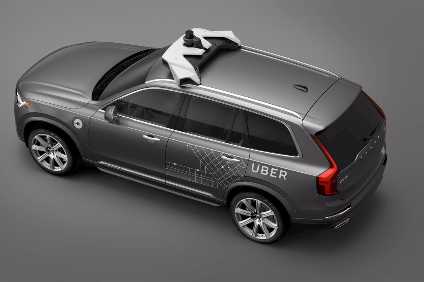
Uber loses money, lots of it. Although ride-hailing is seen as a sunrise industry, Uber has struggled with high costs even as it has grown revenues. Nevertheless, the privately held start-up has attracted investors who see a bright future in ride-hailing and are reassured by its dominant share (over 70%) of the US ride-hail market.
It does face an existential threat though in autonomous drive technology which potentially results in very much lower cost journeys when compensation for the driver disappears. Uber has made no secret of its plan to eventually remove the driver and radically change its own business model. Uber’s Advanced Technologies Center in Pittsburgh has been working on a self-driving system for some time.
Go deeper with GlobalData


Access deeper industry intelligence
Experience unmatched clarity with a single platform that combines unique data, AI, and human expertise.
The traditional automotive industry also faces disruption if such asset sharing eats too far into its business model, which relies on manufacturing, dealers and people owning cars. Moreover, cars are objects of desire and OEM marketing departments promote brand attributes that are something more than the mere means to get from point A to B.
Automotive OEMs, unlike Uber, still make big profits.
The value chain is clearly going to be subject to change as the ‘sharing economy’ gets traction in urban areas and among a new generation of young people that is less inclined to own things. It’s already happening, but that doesn’t necessarily mean the automotive market will be turned upside down tomorrow. There are considerable uncertainties. Automotive OEMs, unlike Uber, still make big profits. Ride-hailing appears to co-exist with the traditional transportation business model, at least for the foreseeable future. Driverless vehicles are a few years away and there are many different opinions on how the technology will make it to market and how the value chain for urban transportation will change over the next decade.
It is interesting though, to see how vehicle makers are addressing some of the big questions strategically – whether we are talking about electrification, autonomous drive or carsharing (sharing of the vehicle asset for hire by the hour).
It’s the convergence of these elements that creates even greater uncertainty and potential for disruption. Being a part of the changes that are coming is probably a wise move. The concept of shared autonomous vehicles (SAVs) may keep some automaker executives awake at night, because in simple terms, much higher fleet capacity utilisation – for example with five people sharing one vehicle when they previously owned five – implies a much smaller annual vehicle market. But if it happens in a big way, you’d want to be one of the OEMs still standing and supplying vehicles to the SAV fleet operators. Acting now and being seen to be close to the pioneering edge of the change that is coming will also impress stakeholders and investors.
Uber is some way from nailing driverless vehicle technology, but it has sent a message out with its announcement of a non-binding supply agreement with Volvo Cars. And Volvo Cars has sent a message, too. For one thing, it is embracing change, not fearing it.



