
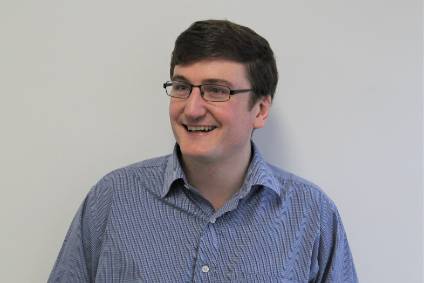
Recently a digital twin of the Midlands Future Mobility testbed was launched by software specialist rFpro. The model has enabled, for the first time in the UK, autonomous vehicles (AVs) to be validated on public roads. Continuing just-auto/AIC's series of interviews, we caught up with Matt Daley, operations director at rFpro to learn more.
How critical is the use of simulation for the training and validation of AVs and why is relying on real-world testing alone less feasible?
Go deeper with GlobalData


Discover B2B Marketing That Performs
Combine business intelligence and editorial excellence to reach engaged professionals across 36 leading media platforms.
If real-world testing and validation of autonomous vehicles (AVs) was the only option then, I believe, they simply wouldn't happen. AVs would need to have been driven for hundreds of millions of miles to rigorously assess the systems relied upon to provide safe, dependable transport with a proven record of reliability in terms of accident avoidance. This clearly isn't feasible. There simply isn't the time nor money available.
To fully train AV systems, they must be subjected to a wide range of scenarios before any real-world validation can be considered. Simulation compresses the timeframe required for this 'training' considerably. The utopia would be to only use real-world testing to simply correlate the simulated results and this is what we believe the industry is working to. Until then, simulation technologies will complement real-world testing and help to significantly accelerate AV development.
Is this where your recent partnership with WMG comes into play?
We have developed an incredibly accurate digital model of the Midlands Future Mobility testbed, which enables correlation of simulated results in the real world. The infrastructure that the MFM project has put in place is absolutely critical to this and enables simulation to become a recognised part of the approvals process for AVs for the first time.
A road network around the University of Warwick campus, an area of Coventry town centre and a section of one of the area's busiest access roads, Holyhead Road, are all sections of the Midlands Future Mobility testbed that can now be used for testing and validation. The infrastructure, which includes geo-fenced Closed Circuit TV, real-time kinematic corrected GPS and high-capacity wireless connectivity, enables the entire environment to be accurately measured – it is crucial to know the position of all other vehicles and road-users to establish whether the test was truly successful. For example, simply returning from a test having not crashed is not enough to prove success.
Is this approach to virtual validation new?
Use of simulation as part of this type of virtual validation is a widely proven method in engineering. In Formula 1, for example, the first thing a team will do after a race weekend is to drive the simulator to verify that the simulated vehicle feel, or characteristics, and data matches what was gathered in real-time during qualifying. If the simulator correlates with critical data then they know that this is a true representation and can begin work to hone setup or fine-tuning for their next race.
A major premium vehicle manufacturer that we work with already commits around 40% of the validation of its design and performance requirements to simulation tools in an attempt to optimise its processes. This is fairly typical of the approach by major manufacturers and their acknowledgement of the benefits that can be brought by virtual validation. Many are working towards 100% of design and performance validation to be carried out in a simulated environment.
rFpro provide the virtual environment in which these simulations can occur but presumably this is just one piece of the puzzle?
A joined-up, collaborative approach is absolutely vital to accelerate the development of AVs. Fortunately, there are a number of projects underway that pull on the expertise of a significant number of specialists in order to work towards common goals: safer, less congested roads with fewer emissions.
Taking the project with WMG as an example. Midlands Future Mobility is a vast consortium of companies and bodies, including HORIBA MIRA, AVL, Transport for West Midlands, Costain, Amey, Wireless Infrastructure Group, Coventry University, Highways England, Vodafone and Immense. This is representative of the commitment to change demonstrated by the automotive industry in the UK with companies utilising each other's strengths rather than competing in a detrimental fashion.
How do you see the future of AV approvals working?
The processes for AV development, validation and approvals are quickly evolving. Billions of dollars every year is spent and where such figures are involved, the drive for technological advancement is so focused and the anticipated timescales so contracted, absolute rigour is required for AV approvals.
It is anticipated that the industry will develop a global standardised library of virtual test scenarios. Once passed, it is expected that the autonomous model will move to the next stage where a sample of the test scenarios will be selected and expanded on for physical real-world testing.
In a process known as regression testing, test libraries are run continuously to ensure that any autonomous model refinement has not had a knock-on effect on existing functionality. rFpro enables this through the concurrent running of a cluster of machines, which allows each test to scale multiple CPUs and GPUs to cope with the complexity of input from multiple camera, LiDAR and radar sensors.
Do humans still have a significant role to play in validating AVs?
Humans have a crucial role to play. Either as an AV passenger or observer from another simulated vehicle, humans provide tangible identification and feedback on perceived irrational behaviour, irritating or unexpected actions, or behaviour that is likely to rankle other road users.
As a passenger, the difference between travelling with an erratic driver and an excellent one is huge, both in terms of wellbeing and physical comfort – levels of relaxation, anxiety, jarring from harsh braking, acceleration or failure to identify potential hazards. If AVs are to tempt customers into relinquishing control of their vehicle, the industry has to ensure that it's providing an environment that is better than the one they are giving up. In other words, AVs have to be expert, conscientious drivers that provide a safe, cossetting environment. Human interaction and feedback in order to achieve this is absolutely crucial.




