
Last month had two fewer selling days than September 2018, but it wasn’t the number of days, it was the days themselves.
This year, the US Labor Day weekend was counted in August and it made a huge difference.
Go deeper with GlobalData


Discover B2B Marketing That Performs
Combine business intelligence and editorial excellence to reach engaged professionals across 36 leading media platforms.
While the US automakers have switched to a quarterly reporting schedule, the European, Japanese, and Korean carmakers have continued to report their monthly results and that provides some insight.
At the end of the August sales month, volume was up 12%. In September, it fell 12.1%, leaving the import/transplant car companies with a nine month deficit of 1.2%.
September was rough enough that even Subaru missed its mark for the first time in 93 months, ending one of the longest continuous growth streaks in US automotive history.
Added to the quarterly reports from Fiat Chrysler, Ford and General Motors, third quarter sales were virtually flat, up 0.05% to just shy of 4.3m deliveries.
The seasonally adjusted annualised rate came in at 17.16m cars and light trucks, down about 260,000 units from September 2018 but up about 90,000 units from August 2019 and the best tally since June.
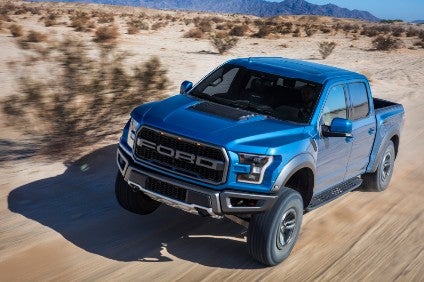
Fiat Chrysler and General Motors beat their Q3 numbers from a year ago but Ford came up short as record van deliveries and a very strong performance from Lincoln failed to overcome plunging car sales, a slump in Ford brand utility deliveries, and a 6% stumble in crucial F-series pickup turnover. The F-series has accounted for 36.7% of total FoMoCo sales over the first nine months of 2019.
Fiat Chrysler picked up some bragging rights in Q3. Not only has the Ram pickup basically locked up the runner-up position in the light vehicle standings, but the Dodge Challenger was the top selling muscle car in the third quarter, outselling not only the Chevrolet Camaro but the almost untouchable Ford Mustang. The Mustang still holds the year to date (YTD) lead but it’s been a long time since it lost the top spot in the pony car niche, even for a month.
One has to wonder what Fiat Chrysler is going to do about the Fiat part in the United States. So far this year, Fiat brand vehicles have accounted for just 0.4% of FCA US total volume and not a single Fiat model broke 1,000 sales in the three months from July to September. The company sold almost as many Alfa Romeo Stelvios as it did of all four Fiat models combined.
The Jeep Gladiator pickup looks to be a hit. In the last quarter, it outsold every mid size pickup except the Toyota Tacoma, Chevrolet Colorado and Ford Ranger. That’s quite a feat considering the Gladiator’s pricing starts about US$10,000 (GBP8,100) more than the competition.
General Motors delivered the best performance of the Detroit and American automakers with deliveries up 6.2%, propelled by a 20% jump in sales of the full-size Chevrolet Silverado and GMC Sierra pickups.
Tesla’s estimated third quarter sales nosedived, falling 41.1% by the end of September. It now holds the unenviable position of having the largest nine-month shortfall of any of the auto companies.
Between Ford and Tesla, the American automakers lost about half a percentage point of market share in Q3.
While Nissan struggles to find a new CEO in Japan, it’s struggling to find sales in the United States. With a 4.8% deficit in Q3 and a 7.1% shortfall for the first three quarters of 2019, it’s faring worse than any of the Japanese carmakers except for Mazda which is one of the smaller players in the US market.
Honda and Subaru were the only major Japanese automakers to be in the black at the end of the third quarter. Honda was about 10,000 units and 2.4% ahead of Q3 2018 while Subaru added more than 5,000 vehicles and 2.9% to its total from last year.
Toyota sales fell 1.1% in Q3, leaving it with a YTD deficit of 2.5%.
The Korean car companies gained some market share as both Hyundai and Kia reaped the benefits of adding more utilities to their lineups. Hyundai sales rose 6.8% while Kia posted a more modest 0.2% improvement. Both brands are now ahead of their year ago marks after nine months.
Both BMW and Mercedes-Benz delivered positive results in the July-September period with Mercedes beating BMW by 829 sales over the three months.
Jaguar Land Rover split between the two brands with Jaguar volume falling 3.7% and Land Rover sales up 0.8%.
Volkswagen and Audi finished Q3 in the red, VW by 2.5% and Audi off 2.2%. Porsche deliveries rose 12.1%.
Thanks to the S60 sedan, XC40 and XC90 utilities, Volvo was ahead of the game by 3.8%. The company noted that last month was the brand’s best US September in 13 years.
The import and transplant vehicles picked up another 0.2% of the total US light vehicle market so far this year. 55.8% of all deliveries have been non-US brands. With the American carmakers exiting the passenger car market, it is not surprising that 78.3% of all the cars sold in Q3 were foreign brands.
What might surprise some is the fact that the Americans are also losing share in the still hot utility segment. 61.3% of the crossovers and SUVs delivered in Q3 were not Detroit brands even though Jeep remains the most popular brand of utility.
The minivan segment is almost an even split with Fiat Chrysler owning 54.8% of the segment and everybody else splitting up the remainder.
The Detroit Three really shine when it comes to pickups and commercial vans. That’s a good place to be considering that those were the two segments with the most growth in the quarter.
Some 84.1% of all pickups sold in Q3 came from Ford, General Motors and Ram. The same companies also claimed 82.5% of commercial van turnover and van sales rose 20.4% in Q3, the most of any segment.
The growth in new vehicle prices abated somewhat in September and the cuts in the interest rates have helped to keep consumers reasonably happy. But financing terms are getting longer with an increasing number of loans running well past six years.
Going into the final three months of 2019 it still looks like a very soft landing but it’s hard to predict how soft. Too many factors are in play, including the interest rates, concerns about the economy, and a decline in manufacturing. However, consumer sentiment remains mostly positive thanks to long overdue income adjustments for middle class households.




