
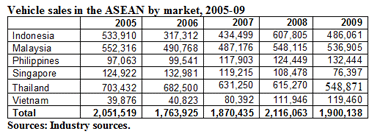
Vehicle sales in the top six ASEAN markets combined fell by 10.2% to just over 1.9m units in 2009, with a sharp fall in the first half of the year partially offset by a strong second half recovery. Market recovery is expected to continue in 2010.
Go deeper with GlobalData


Discover B2B Marketing That Performs
Combine business intelligence and editorial excellence to reach engaged professionals across 36 leading media platforms.
Consumer and business sentiment improved markedly across the region in the quarter, as economies across the region began to stabilise around the mid-year mark. Exceptionally low interest rates and government stimulus measures helped trigger a market recovery. Fourth-quarter sales were particularly strong, with combined volumes rising by 16.7% year-on-year to 571,708 units.
Two ASEAN markets finished the year positively in 2009, with Vietnam sales hitting a new record high of 119,460 units and the Philippines reaching a level not seen since the mid-1990s. Sales in Malaysia fell by just 2%. Singapore was the worst performer, with sales declining by almost 30% to 76,397 units; Indonesia by 20% to 486,061 units; and Thailand by close to 11% to 548,871 units.
Most markets in the region are expected to continue to grow in 2010, as stimulus spending continues and with interest rates unlikely to be increased significantly until the second half of the year at the earliest. GDP across all markets is widely expected to grow by at least 4.5-5.0%, helped by a rebound in exports and higher commodity and agricultural prices. Only Vietnam is expected to see weaker sales in 2010, at least in the first half, after the government increased the automotive VAT rate.
Indonesia
New vehicle sales in Indonesia fell by 20% to 486,061 units in 2009, compared with a record 607,805 units in 2008, according to data released by the local vehicle manufacturers association Gaikindo. The decline was much less than had been forecast by the association earlier in the year, with average monthly sales recovering in the second half of the year after a sharp drop in the first.
Sales in December increased by 20.8% year-on-year to 47,896 units – the average level for the previous four months. Domestic sentiment improved significantly in the third quarter, thanks to historically low inter-bank interest rates of 6.5%, the improved availability of finance and growing optimism regarding the regional and global economy. Full-year GDP growth is estimated to be around 4.5%.
The industry is upbeat about the market’s prospects over the next two years, with the association expecting total vehicle sales to increase by 15% in 2010 provided that taxes on second cars are not increased. GDP growth is forecast to accelerate to 5.5% this year, but with inflation under control interest rates will unlikely be raised until the second half at the earliest.
Thailand
The Thai vehicle market declined by 10.8% to 548,871 units in 2009, compared with the 615,270 vehicles sold in 2008, according to data released by Toyota Motor. Sales recovered strongly in the final few months of the year after a very weak first half which saw volumes drop by 28%.
Nevertheless, this was the fourth consecutive year of sales decline and reflects weak consumer and business confidence and falling investment, exacerbated by political turmoil. The main weakness last year was in the commercial vehicle segment, which dropped by 17.9% to 318,834 units, with sales of one-ton pickup trucks falling by 20.4% to 240,887 units.
Consumer preference has shifted towards more fuel-efficient vehicles – with demand moving away from dual-use pickup trucks. Replacement cycles for pickup trucks also have lengthened. By contrast, passenger car sales fell by just 1.4% to 230,037 units last year.
The industry is upbeat about the prospects for the market after a sharp upturn in sales in the final quarter of 2009 and growth is forecast for 2010. Toyota expects sales to rise by 9% to 600,000 units this year, with pickup trucks leading the recovery, helped by economic stimulus measures introduced by the government and further recovery in agricultural prices.
The economy is expected to rebound this year, with GDP growth widely forecast to rise to above 5% this year, helped by a strong recovery in export demand, large infrastructure investments and growth in the agricultural and tourism sectors. Interest rate hikes are unlikely until the second half of the year and are unlikely to be higher than 2% at year-end.
Malaysia
Vehicle sales in Malaysia declined by 2% in 2009 to 536,905 units, compared with 548,115 units in 2008, according to data released by the Malaysian Automotive Association (MAA). The market finished the year significantly ahead of the association’s forecasts, helped by government incentives, low interest rates and other economic stimulus measures.
Sales rebounded strongly in the fourth quarter, with December sales rising by 20% to 47,668 units, albeit compared with depressed year-earlier volumes. Nevertheless, the improvement also reflects rising consumer and business sentiment and GDP growth of 2% year-on-year, compared with a decline of 6.2% in the first quarter, -3.9% in the second and -1.2% in the third.
Full-year sales of passenger vehicles fell by 2.3% to 486,432 units, compared with 497,459 units in 2008. Commercial vehicles performed a bit better, with sales easing just 0.2% to 50,563 units. Total vehicle production declined by 7.8% to 489,269 units, with passenger car output falling by 7.7% to 447,002 units.
With GDP growth forecasts for 2010 ranging mostly between 4-5%, reflecting an expected recovery in exports, the MAA is optimistic that the vehicle market will continue to build on the gains made in the fourth quarter of 2009. Growth is expected to be moderate, however, with possible interest rate hikes in the second half expected to keep ceiling on growth.
Tony Pugliese
 |




