A flood of new models and strong competition boosted September’s UK car market by 12% over last year.
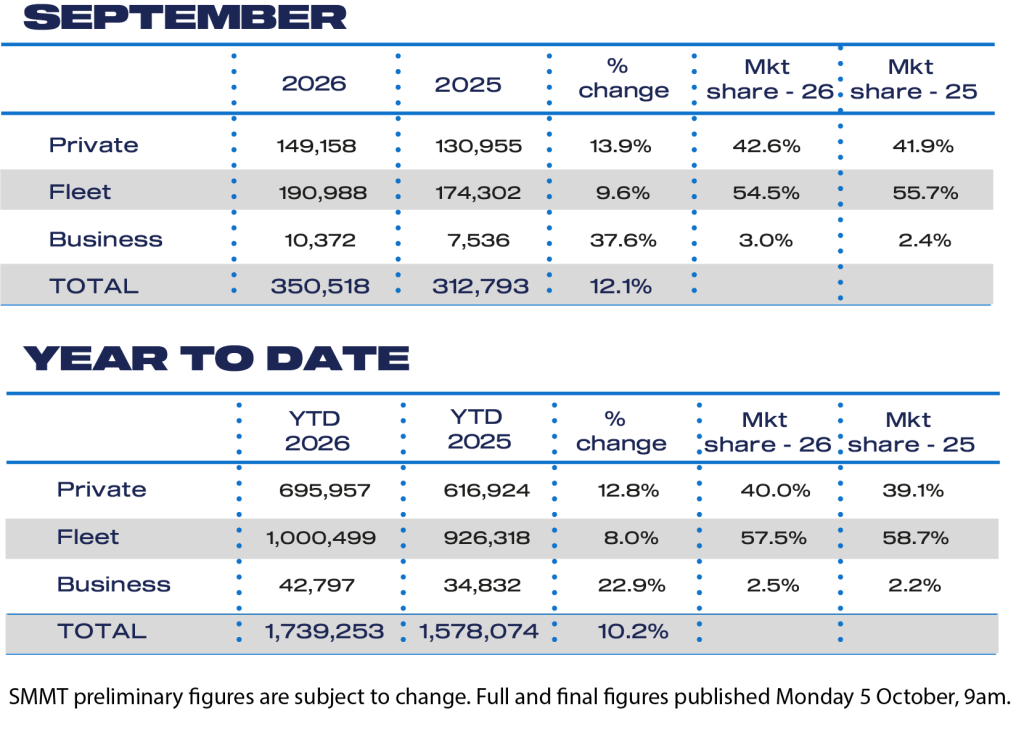
The UK new car market accelerated in September, with registrations up 12.1% to 350,518 units, according to figures published by the Society of Motor Manufacturers and Traders (SMMT).
Go deeper with GlobalData


Discover B2B Marketing That Performs
Combine business intelligence and editorial excellence to reach engaged professionals across 36 leading media platforms.
The result marks a 10th consecutive month of growth and the strongest September since 2017.
However, the market this year will likely turn out well under pre-Covid levels at around 2.2m units (and that total propelled by intense competition driven by recent Chinese brand entrants) according to GlobalData.

The September plate-change month is one of the year’s most important, typically accounting for around one in seven annual registrations. While consumer confidence has improved recently and GDP growth been more resilient than expected, the SMMT said overall growth is largely being driven by intense competition – significantly from new entrants. It said increased choice and attractive deals are encouraging many into the new car market who might otherwise have bought used.
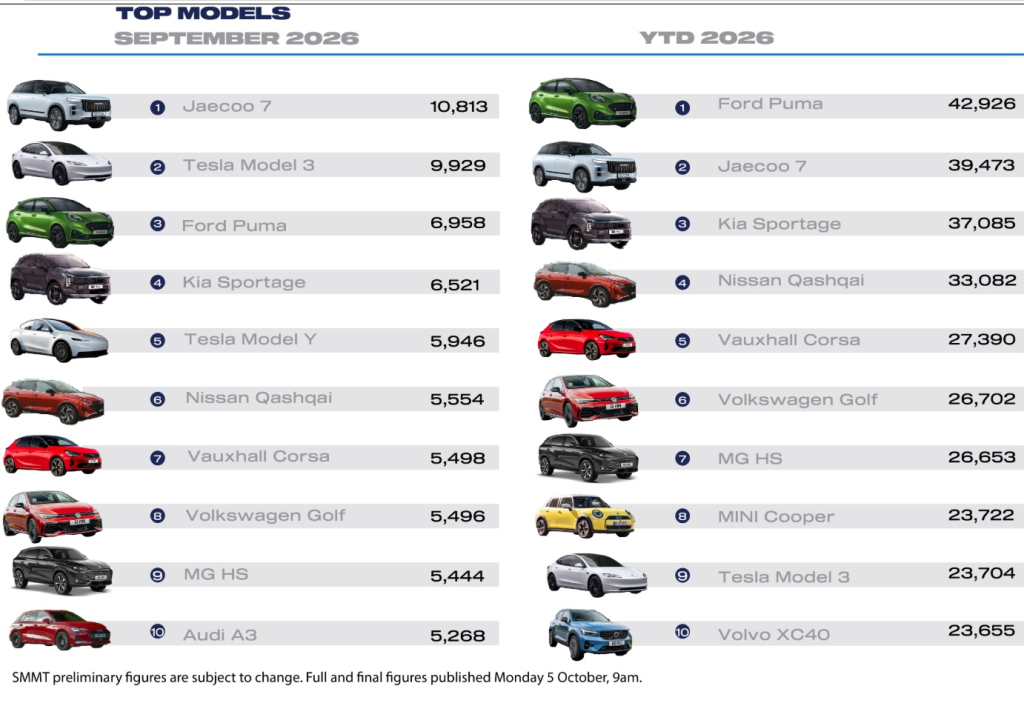
Notably, the Jaecoo 7 topped the sales charts last month – as it did previously in March, the UK’s other year-identifier registration plate-change month in the calandar year. The plate-change months of March and September tend to see concentrated OEM marketing activities and dealer discounts. A Jaecoo model at the top of the sales chart is an indication of just how competitive the market was in September. Year-to-date, Ford’s Puma is in the number one slot.
Market growth was recorded across all sales types last month. Fleet registrations rose 9.6% to 190,988 units, representing 54.5% of the market, while private demand increased 13.9% to 149,158 units and a 42.6% share. Registrations by the smaller business sector grew 37.6% to 10,372 units.
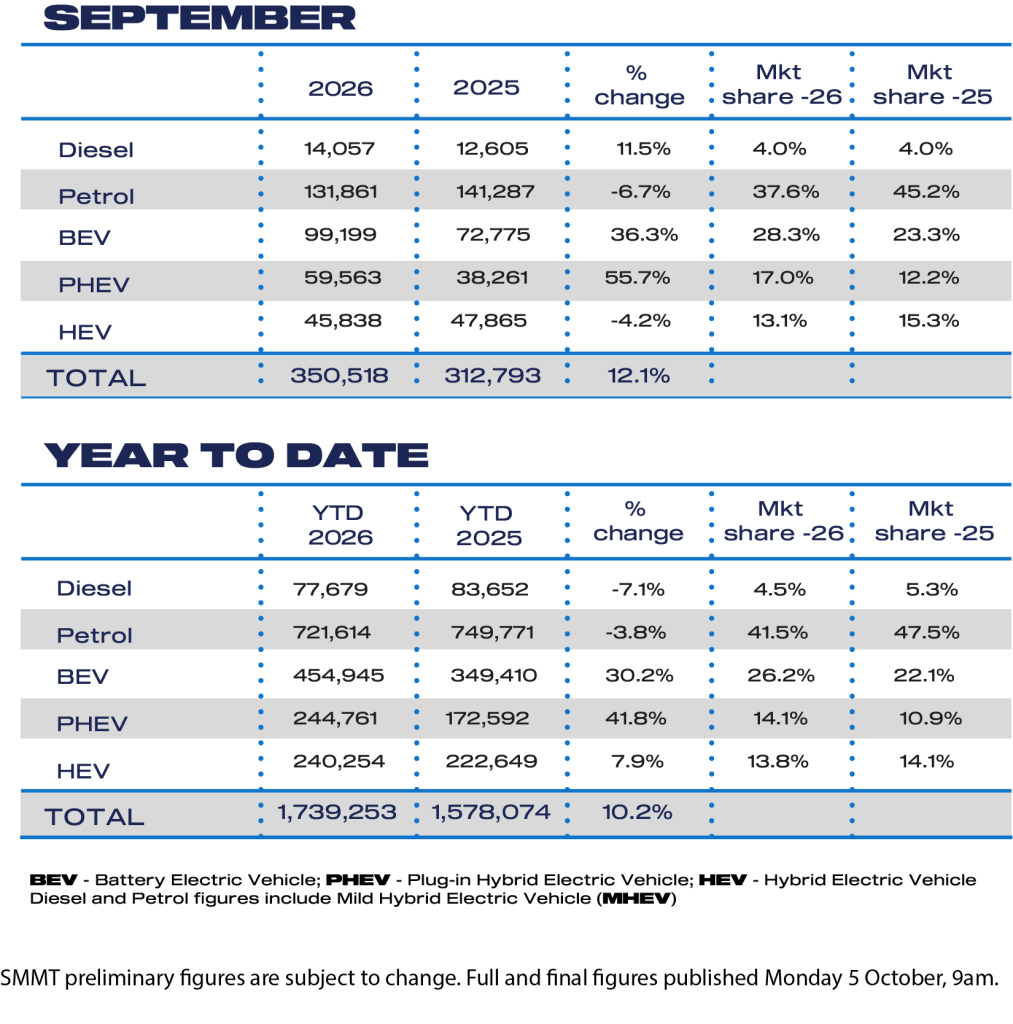
Electrified vehicles helped power growth, taking a record 58.4% of registrations. Hybrid electric vehicle (HEV) uptake dipped 4.2% reducing market share to 13.1%, but plug-in hybrid (PHEV) registrations surged 55.7% to take a record volume and share at 17.0%. Battery electric vehicle (BEV) demand, meanwhile, climbed 36.3% to a record high volume of 99,199 units with market share up five percentage points to 28.3%. That equates to almost five new BEVs registered every minute – more than double the rate three years ago – as buyers respond to unprecedented model choice, especially in the smaller segments, compelling discounts and government’s Electric Car Grant.
Since 2023, the number of BEV models on the market has more than doubled, with 178 now on sale. Alongside over 110 PHEV and 50 HEV models, the UK’s electrified offering now represents more than three quarters of new cars available. This expanded choice, along with substantial manufacturer discounts and government incentives, delivered September’s landmark result but it also shows the scale of the challenge ahead.
Some 454,945 new BEVs have now been registered in the first nine months of the year, accounting for 26.2% of registrations, significantly below the 33% mandated for 2026 and behind even last year’s target of 28%. A 33% share would require an additional 265,000 new BEV registrations in the final quarter alone, illustrating how, despite the range of regulatory flexibilities available, targets continue to outpace demand.
The SMMT said the ZEV Mandate review is an opportunity to ensure the transition to EVs supports long-term growth.
Mike Hawes, SMMT Chief Executive, said: “September’s record EV performance is a major achievement. Drivers are increasingly embracing the growing choice of models made available and high fuel prices are also undoubtedly giving more consumers reason to consider going electric. The industry’s commitment is clear with billions of pounds of investment in new models, new technology and incentives. Despite all these factors, uptake remains behind mandated targets and, whilst flexibilities help, the UK still has the world’s toughest targets and highest energy costs. The Mandate review is an opportunity to review those factors, to build on this momentum and support consumers but, in doing so, strengthen business viability and UK competitiveness.”