

Suzuki Motor is preparing to bring an electric kei-class minicar to Europe as early as 2027, taking on domestic and Chinese EV rivals, Nikkei Asia reported.
The planned export model will draw on the Vision e-Sky, a vehicle set for release in Japan this November as Suzuki’s first electric kei passenger car.
Go deeper with GlobalData


Discover B2B Marketing That Performs
Combine business intelligence and editorial excellence to reach engaged professionals across 36 leading media platforms.
Production will take place at a facility in Shizuoka prefecture, located southwest of Tokyo.
Among the European markets being considered for the launch are the UK and Italy.
Suzuki has yet to confirm pricing or release timing for the European version.
However, the UK price is anticipated to fall below £20,000 ($26,873.50), which would place it among the continent’s most affordable electric vehicles, comparable to Renault’s Twingo city EV.
The e-Sky is expected to offer a driving range of 310km, with certain specifications modified to meet European regulatory requirements and road conditions.
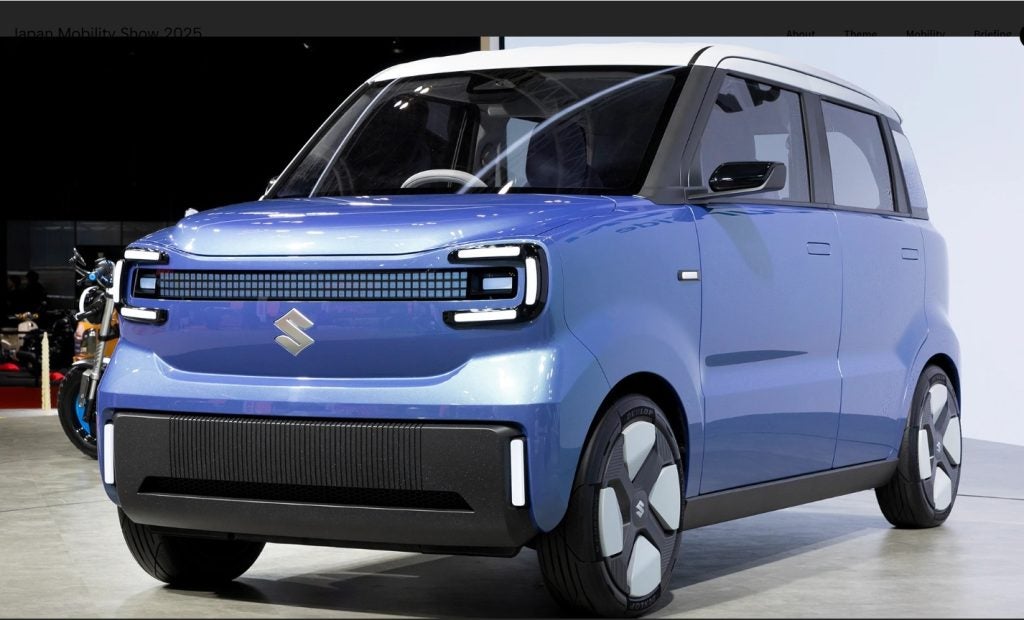
The vehicle’s batteries will come from a supplier linked to Chinese automaker BYD.
Should the plan proceed, it would represent the first instance since the 1990s of Suzuki exporting a kei car to Europe with minimal changes from its Japanese configuration – a practice last seen with limited shipments of the Cappuccino convertible in the 1990s.
Suzuki launched its Cappuccino Kei class sports car in the UK in 1993 with around 1,200 being sold over the following two years. Tougher emissions standards and higher compliance costs led to the model being withdrawn from sale in 1995.
The current move comes after the European Union established a new vehicle category in 2025, partly inspired by Japan’s kei car system, which provides subsidies and eased regulations for small electric vehicles built within EU territory.
This classification allows for vehicles up to 4.2m in length, exceeding the kei car length limit.
As Suzuki’s electric kei model will be manufactured outside the EU, it is unlikely to be eligible for these incentives.
Suzuki’s sales across Europe declined by 15% to 187,000 units in the twelve months ending in March.
The company is looking to strengthen its European operations by moving into the rapidly expanding electric vehicle market, with any success potentially serving as a springboard for growth in other regions favouring small cars, such as Southeast Asia.
Meanwhile, data from the European Automobile Manufacturers’ Association cited in the report showed that battery electric passenger vehicle sales in 31 European countries increased by 35% from a year earlier in the first six months of the year.
This marked the first time such sales surpassed those of petrol vehicles over a six-month span, representing 22% of total new-vehicle sales.
Separately, Suzuki Motor announced in June its plans to expand marketing efforts across Africa, targeting roughly 20% growth from current levels to reach 150,000 units by fiscal year 2030 (FY30).




