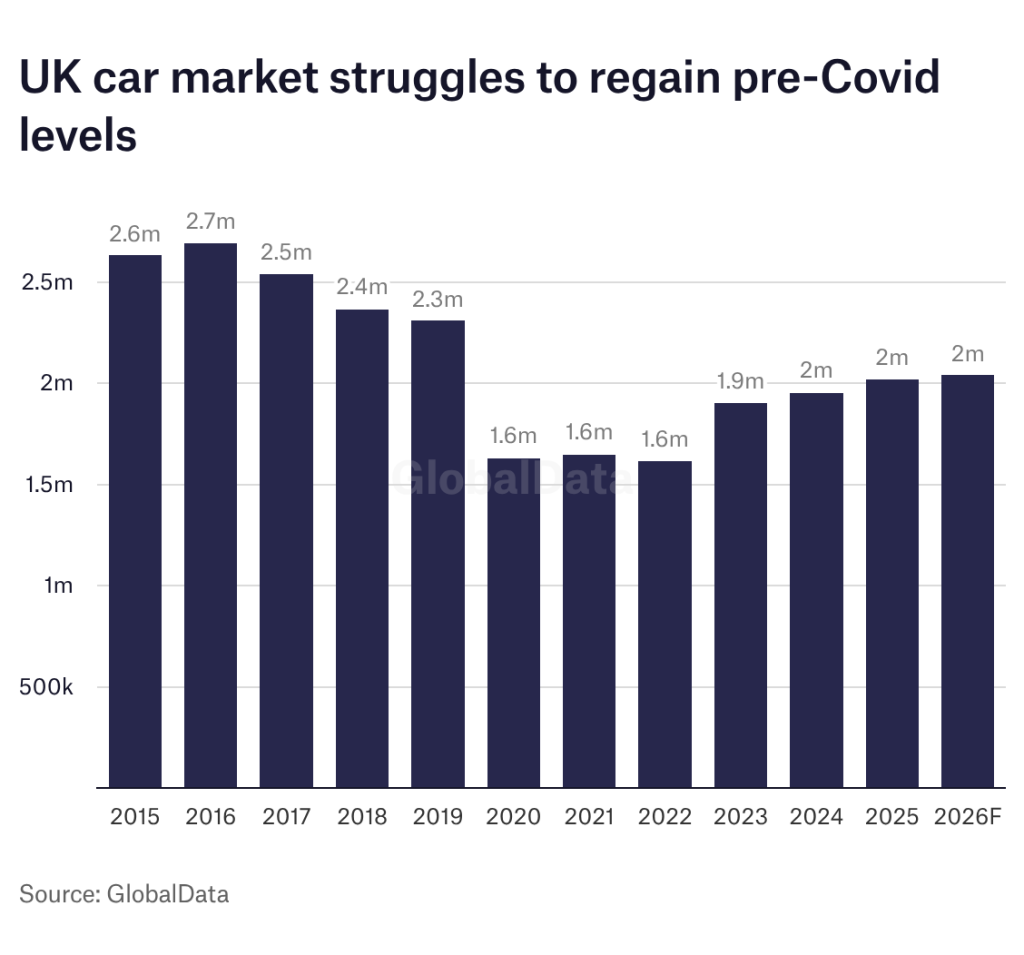
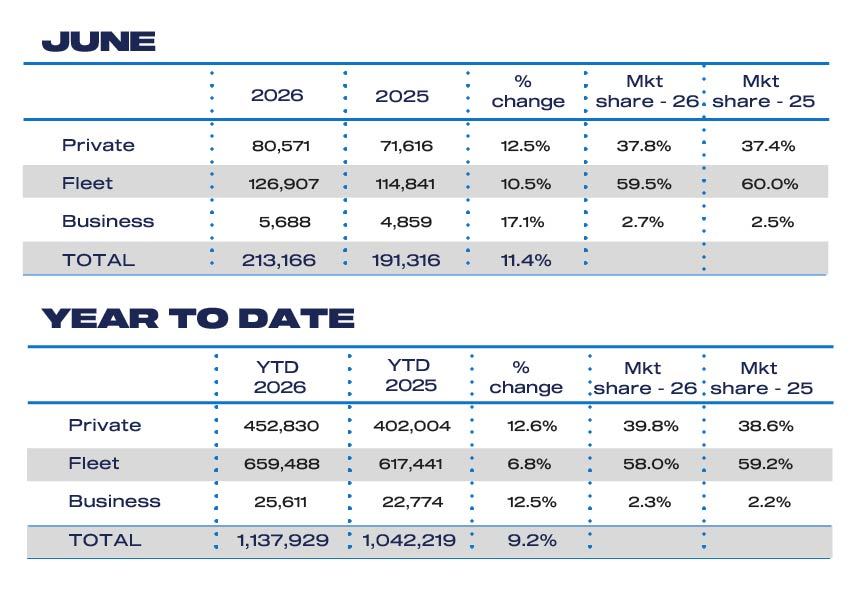
The UK new car market’s recovery continued in June, with registrations rising 11.4% to reach 213,166 units in the best performance for the month since 2019, according to figures published by the Society of Motor Manufacturers and Traders (SMMT).
Go deeper with GlobalData


Discover B2B Marketing That Performs
Combine business intelligence and editorial excellence to reach engaged professionals across 36 leading media platforms.
Growth was recorded across all sectors, with registrations by private buyers up 12.5%, fleet deliveries increasing by 10.5% and the smaller business segment posting a 17.1% rise. Fleets continued to comprise the lion’s share of the overall market, accounting for six in 10 (59.5%) new cars registered.
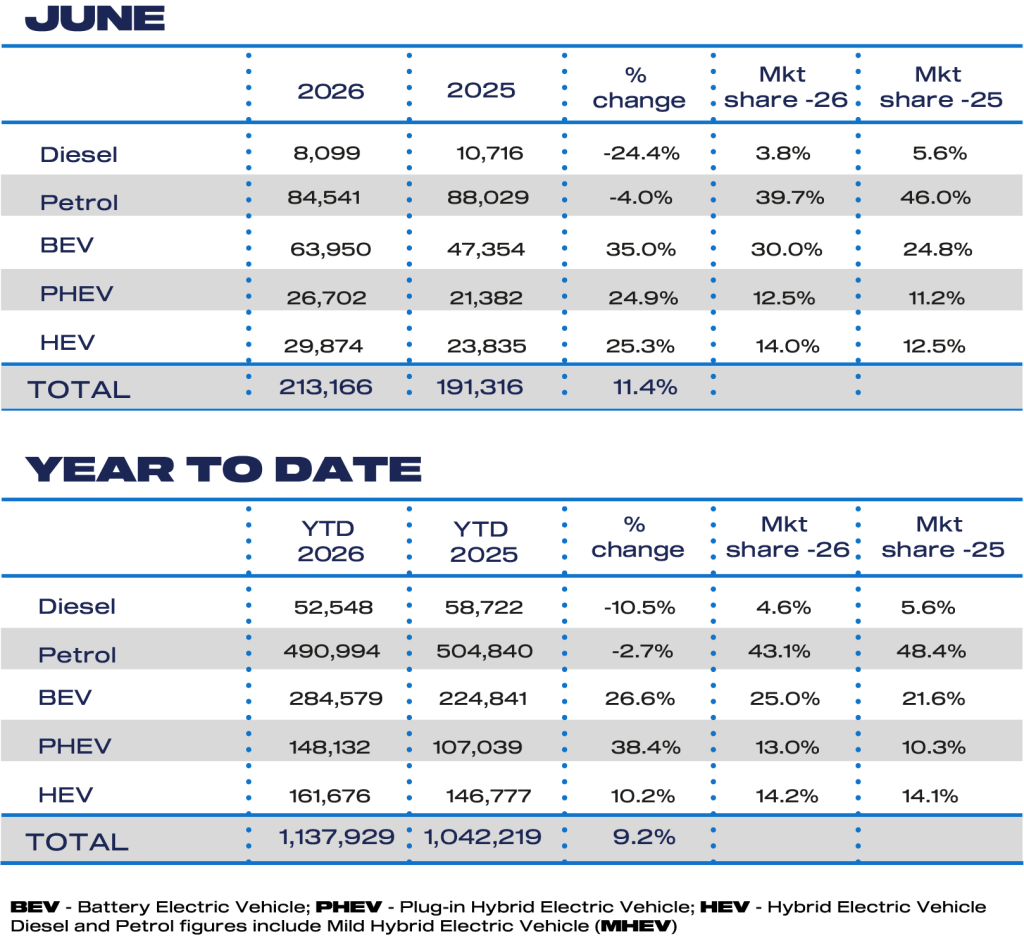
The uplift was driven entirely by electrified vehicles as the UK’s car market continues to evolve, due to a wider choice of models and powertrains providing lower and zero emission mobility, as well as an expanded pool of brands now operating in the UK (most notably the addition of Chinese brands).
Plug-in hybrids (PHEVs) took 12.5% of the market, while hybrids (HEVs) accounted for 14.0%. Battery electric vehicles (BEVs) saw the most significant growth to take a 30.0% share – the highest so far this year, reflecting the trend of high volumes at the end of each quarter and consumer interest spurred by the impact of the Middle East conflict on fuel prices.
Year to date, BEVs account for 25.0% of the market – a record achievement, but still far short of the 33% ZEV Mandate target for 2026. To meet it outright, BEVs would need to surpass 40% of new registrations across the rest of the year, yet three out of every four new car buyers are currently choosing other powertrains, the SMMT notes.
The SMMT also said that ‘mandate flexibilities are helping manufacturers comply for now, but their value is diminishing as natural EV demand fails to grow at the pace expected’. Despite more choice, government incentives and more than £12 billion in manufacturer discounts, uptake is still not rising fast enough, the SMMT says – damaging profitability, diverting investment and weakening residual values.
The SMMT also said that automotive leaders are united in viewing the 2030 target as currently unachievable, with 100% of respondents to SMMT’s latest UK Automotive Business Leaders Barometer saying the UK is behind the trajectory needed to meet the mandated 80% share, and almost three quarters (73.8%) believing it is significantly behind.
The SMMT said that while the auto industry remains committed to the [energy] transition, ‘urgent reform of the mandate is now essential’. It said the unsustainable cost of compliance is making the UK an increasingly uncompetitive place to both sell and produce cars – putting investment at risk as other markets with less restrictive regulation become more attractive propositions.
Mike Hawes, SMMT Chief Executive, said: “June’s performance is very strong, showing EV uptake is growing, with battery electric cars reaching their highest market share this year and more than half of buyers choosing electrified models. But even these record levels are still not enough to meet mandated targets. Manufacturers are investing billions developing and bringing the vehicles to market – and spending billions more to sell them, yet the market is still not moving fast enough. Reforming the mandate now is essential not just to keep the transition on track but to protect the UK’s competitiveness, attract investment and safeguard jobs.”
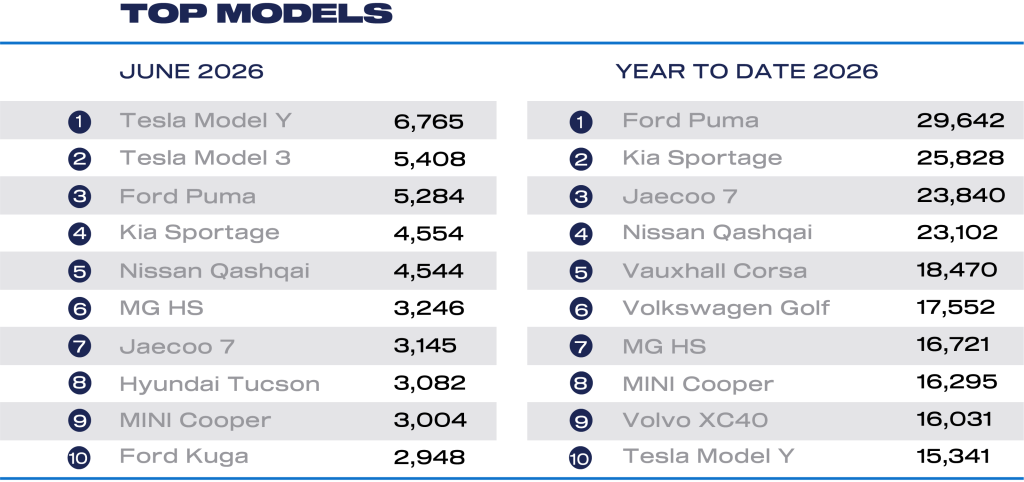
In another sign of improved performance for Tesla, its Model Y and Model 3 were the two top-selling models in the UK last month.